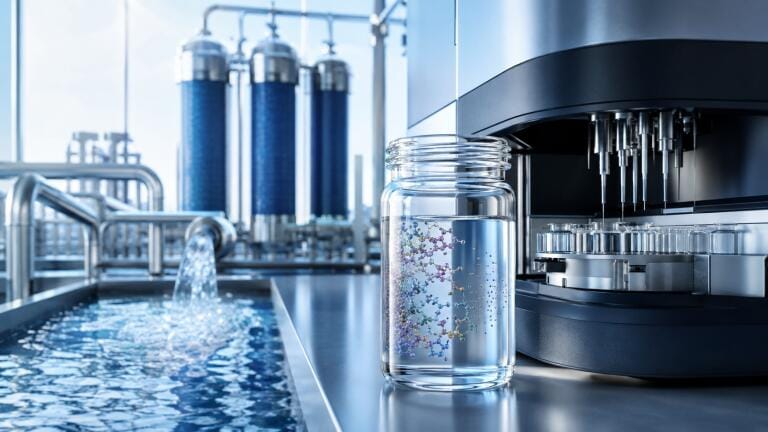
LC-MS
Researchers have combined experimental design with non-target LC–HRMS to detect and prioritise known and unexpected contaminants throughout drinking-water treatment
Researchers have combined experimental design with non-target liquid chromatography–high-resolution mass spectrometry to improve the detection and prioritisation of known and unexpected chemicals during drinking-water production.
Water laboratories routinely use targeted analytical methods to measure regulated pesticides, pharmaceuticals and other contaminants. These procedures offer high sensitivity and reliable quantification, but they can detect only substances included within a predefined analytical list.
Non-target analysis provides a broader view by collecting high-resolution mass-spectrometric data for thousands of chemical features. Its value, however, can be limited by the difficulty of separating meaningful contaminant signals from dissolved organic matter, instrumental background and other sources of interference.
Researchers from the University of Florence in Italy, worked with the water utility company ‘Publiacqua’, that serves the Tuscany region and the Florence metropolitan area, to develop a two-stage prioritisation framework based on liquid chromatography–high-resolution mass spectrometry.
The investigation examined chemicals of environmental concern and transformation products across a drinking-water treatment chain. Such compounds can include pesticides, antibiotics, personal-care ingredients and substances formed or modified during water treatment.
The researchers first used design of experiments to optimise the acquisition conditions. Rather than alter one instrumental parameter at a time, this statistical approach allowed the team to assess interactions between several factors and identify conditions that maximised the detection of relevant features.
Optimisation used a training set of 42 regulated chemicals that covered a broad range of physicochemical properties. This diversity was important because no single chromatographic or mass-spectrometric condition provides equally effective detection for every compound.
The first prioritisation stage operated during data acquisition and favoured signals associated with the combined chemical burden from dissolved organic matter and contaminants. A subsequent offline stage applied data-processing criteria to reduce the large feature list and identify signals that warranted closer examination.
By integrating these stages, the framework aimed to preserve information about unexpected compounds while limiting the background noise that can obstruct non-target analysis. It also allowed the researchers to examine how chemical profiles changed as water passed through the treatment process.
The approach does not provide immediate identification for every detected feature. A high-resolution mass signal can indicate elemental composition and support tentative annotation, but definitive identification may still require reference standards, fragmentation evidence and complementary analysis.
Non-target screening also cannot replace validated quantitative methods for regulated substances. Its principal role is to reveal gaps in existing surveillance, identify emerging priorities and direct targeted investigations towards compounds that conventional monitoring might miss.
The study demonstrates how design of experiments can improve the analytical stage of non-target screening rather than serve only to optimise later data processing. This could help laboratories to extract more useful chemical information without simply generating larger and increasingly unmanageable datasets.
Further trials across water sources and treatment plants will be necessary to test the framework against different organic matrices, seasonal conditions and treatment technologies. Laboratories will also require common reporting and quality-control procedures before results can be compared confidently.
The work provides a systematic strategy through which liquid chromatography–high-resolution mass spectrometry could strengthen proactive drinking-water surveillance and help utilities to identify chemical risks before they enter routine regulatory programmes.
For further reading please visit: 10.1021/acsmeasuresciau.6c00061

 Product directory





















.jpg)
.jpg)