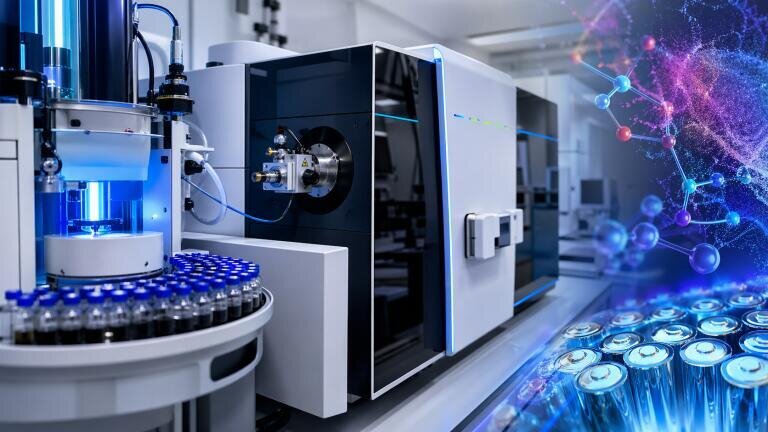
LC-MS
High-resolution mass spectrometry platforms at the University of Münster have enabled particle-level and molecular analysis of lithium-ion batteries, with implications for durability, production and recycling
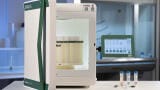
The MEET Battery Research Center at the University of Münster, Germany, has expanded its analytical infrastructure with the addition of two high-end mass spectrometry systems, a move that has strengthened its capacity to interrogate electrochemical processes within lithium-ion cells at high resolution. The centre has installed an inductively coupled plasma time-of-flight mass spectrometer and an Orbitrap mass spectrometer equipped with both liquid chromatography and matrix-assisted laser desorption ionisation capabilities.
These instruments have formed part of the project ‘AUForPro – Analytics to Support Lithium Ion Battery Research, Production and Recycling’, which is funded by the European Union and the German state of North Rhine-Westphalia through its ‘Forschungsinfrastrukturen.NRW’ programme which has allocated several million euros to advance the availability of infrastructure for research.
The expansion has addressed a persistent limitation in battery science, namely the need to resolve complex chemical transformations within cells across multiple spatial and temporal scales. By integrating complementary mass spectrometric approaches, researchers have gained the ability to characterise both elemental composition and molecular structure with a degree of specificity that conventional techniques have struggled to achieve.
“The novel devices not only expand our analytical capabilities but also symbolise the innovative power of our institute. Until now, these devices have hardly been used in battery research.
“This enables us to continue our battery research and, in particular, analytics at an international top level,” said Dr. Sascha Nowak, head of the research division analytics and environment at the MEET Battery Research centre.
Researchers have sought to characterise desirable electrochemical phenomena, such as the formation of the solid electrolyte interphase, which serves as a critical passivation layer between the liquid electrolyte and the solid electrode. At the same time, the platform has enabled deeper investigation of deleterious processes, including ageing mechanisms that degrade performance and limit cycle life. This dual capability has been essential to inform both materials design and operational strategies aimed at prolonging battery longevity.
The inductively coupled plasma time-of-flight mass spectrometer has provided particle-resolved analysis of electrode materials. Rather than rely on bulk averaging, the technique has enabled researchers to assess degradation pathways at the level of individual particles. This extraordinary granularity has proved particularly valuable in the study of heterogeneous ageing phenomena where localised variations in composition or structure can drive performance loss. The same capability has also supported advances in recycling research where precise characterisation of recovered materials at the particle scale has become additionally important to ensure quality and economic viability.
In parallel, the Orbitrap platform has supported detailed molecular analysis of electrolytes and interphases. Coupling with liquid chromatography has allowed separation of complex mixtures prior to high-resolution mass analysis, while the matrix-assisted laser desorption ionisation option has enabled spatially resolved interrogation of electrode surfaces. This has made it possible to determine not only molecular identity but also distribution across interfaces, thereby offering insight into the composition and homogeneity of interphase layers that govern ion transport and stability.
“In the long term, the analysis [of] results will help to develop more powerful, durable, and stable batteries to advance cell production,” said Dr. Simon Wiemers-Meyer, deputy head of the research division analytics and environment at MEET.
The investment has reflected a broader shift within battery research towards integrated, high-resolution analytics that bridge the gap between fundamental chemistry and industrial application. By combining elemental and molecular techniques within a single analytical framework, the MEET centre has positioned itself to address key challenges across the battery lifecycle, from materials discovery to production optimisation and end-of-life recycling.

 Product directory



















.jpg)