LC-MS
Researchers have reviewed how mass spectrometry can support the reliable identification and structural analysis of glycoRNA, an emerging class of glycan-modified RNA molecules linked to immune regulation and intercellular communication
Chemical modification of biomolecules underpins the dynamic regulation of biological systems, from cell signalling and immune recognition to molecular transport and disease progression. For decades, glycosylation was understood largely as a process that modified proteins and lipids. However, pioneering research has shown that glycans can also become metabolically integrated into RNA molecules, forming glycoRNA.
GlycoRNAs have since been found across a wide range of cell types and species, which suggests that they may form part of a conserved and biologically important layer of cellular regulation. Early studies have indicated that these glycan-modified RNA molecules participate in key processes such as immune modulation and communication between cells. They have also been shown to regulate cell migration during inflammatory responses and to assist exosome uptake through interactions with sialic acid-binding immunoglobulin-type lectins, commonly known as Siglecs.
The discovery of glycoRNA has challenged long-established assumptions about the molecular scope of glycosylation. It has also created a pressing analytical problem in that researchers need reliable methods to identify glycoRNA, determine its structure and distinguish related molecular forms in complex biological samples.
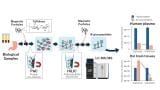
A recent review has examined how mass spectrometry can help to meet that challenge. The authors assessed the mass spectrometry-based glycoRNA analytical pipeline, from sample collection and RNA extraction to glycoRNA enrichment, liquid chromatography-tandem mass spectrometry analysis and computational data interpretation.
Mass spectrometry has become particularly important in this area because of its high sensitivity and its ability to resolve complex structural isomers. In glycoRNA research, those capabilities are essential because both the RNA component and the attached glycan structures can vary in ways that affect biological function. A robust analytical workflow must therefore account for the distinctive biochemical properties of RNA while also providing sufficient structural information about the glycan component.
The review placed particular emphasis on enrichment strategies designed to isolate glycoRNA from complex biological material. These included metabolic labelling approaches – such as Ac4GalNAz – and chemoenzymatic labelling methods, including StCEL and rPAL. These techniques allow researchers to selectively capture glycoRNA molecules before analysis which improves the chances of reliable detection in samples that contain many other forms of RNA, protein, lipid and carbohydrate material.
The authors also discussed how liquid chromatography-tandem mass spectrometry can be combined with several ion dissociation techniques to improve structural analysis. These included collision-induced dissociation, higher-energy collisional dissociation and electron-transfer dissociation. Each approach fragments molecules in a different way, which can provide complementary information about glycan composition, linkage patterns and the relationship between the glycan and RNA portions of the molecule.
Computational analysis was identified as a further critical part of the workflow. The review considered bioinformatics tools for glycan identification and structural interpretation, including GlycoNote and GlycanDIA Finder. Such tools are increasingly important because mass spectrometry data from glycoRNA studies can be highly complex, particularly when researchers need to distinguish between closely related glycan structures or interpret signals from low-abundance molecules.
Overall, the review has provided a systematic reference for mass spectrometry-based RNA glycomics. By bringing together enrichment methods, liquid chromatography-tandem mass spectrometry strategies, ion dissociation techniques and computational analysis, it has set out an integrated workflow for the reliable identification and structural characterisation of glycoRNA.
The authors suggested that mass spectrometry-based glycoRNA profiling could help researchers to characterise glycobiological patterns across healthy and diseased states. Such profiling may reveal distinctive patterns of glycan abundance and composition, including changes associated with inflammation, immune activity or pathological transformation.
The review also highlighted the possible biomedical relevance of aberrant glycan expression. Specific glycan motifs, particularly sialylated and fucosylated glycans, may have potential as biomarkers for disease diagnosis and prognosis. If confirmed through further research, glycoRNA analysis could therefore contribute not only to basic glycobiology but also to precision medicine, where molecular signatures are used to improve diagnosis, risk assessment and therapeutic decision-making.
Although glycoRNA research remains an emerging field, the review underlined the need for rigorous analytical standards as interest grows. Reliable mass spectrometry-based methods will be central to that effort because they can provide the structural detail required to link glycoRNA composition with biological function.
For further reading please visit: 10.1016/j.glycos.2025.100021

 Product directory