LC-MS
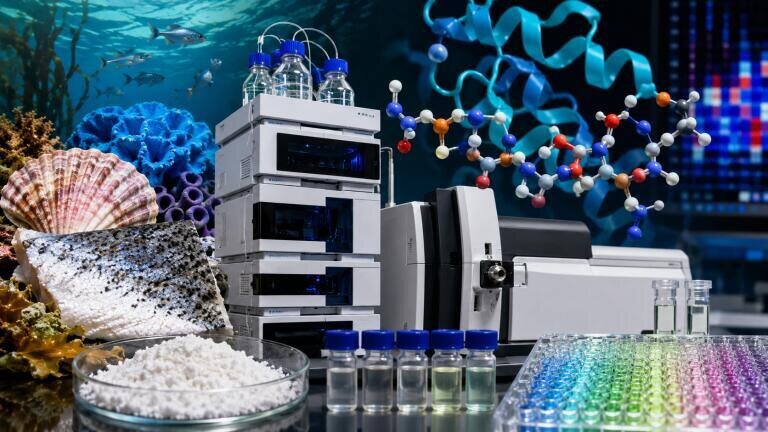
Researchers at China Pharmaceutical University have reviewed how advanced chromatography platforms, high-resolution mass spectrometry and AI-driven bioinformatics have transformed the discovery and characterisation of marine bioactive peptides, with implications for drug development, nutraceuticals and functional foods
Marine organisms have evolved an extensive repertoire of host-defence peptides under conditions of environmental instability and persistent pathogen exposure, and these compounds have now emerged as an important focus for pharmaceutical research, food science and biomaterials development. In a recent review investigators from the School of Pharmacy at China Pharmaceutical University, in Nanjing, China, examined how marine bioactive peptides are produced, purified and evaluated, with particular emphasis on the increasingly central role of chromatography and computational biology in peptide discovery workflows.
Marine bioactive peptides are generally defined as short chains comprising between two and 20 amino acid residues. Although these molecules were once isolated largely through conventional solvent extraction and chemical hydrolysis, the review described how the field has shifted towards more sustainable and analytically sophisticated approaches capable of higher selectivity and throughput.
The authors explained that green deep eutectic solvents have achieved extraction efficiencies of approximately 96 per cent during collagen peptide recovery from cod skin, while enzymatic hydrolysis and microbial fermentation have enabled more controlled release of specific bioactive sequences. One example highlighted in the review involved fermentation of scallop skirt material with a high-altitude Bacillus strain, which yielded the iron-chelating heptapeptide FEDPEFE and reduced production costs by as much as 50 per cent.
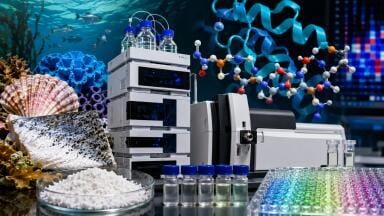
Chromatography now occupies a central position throughout the purification and analytical pipeline. Following peptide liberation from marine biomass, researchers have used membrane separation techniques, multi-mode chromatography systems and capillary electrophoresis to resolve increasingly complex peptide mixtures. The review particularly emphasised the emergence of nano-reversed-phase ultra-high-performance liquid chromatography coupled with high-resolution mass spectrometry as a powerful analytical platform for peptide sequencing and structural characterisation.
These chromatography-based workflows have enabled researchers to identify trace peptides from highly complex hydrolysates with greater sensitivity and sequence confidence than earlier analytical strategies permitted. High-resolution chromatographic separation has also improved the ability to distinguish closely related peptide isoforms and detect low-abundance bioactive compounds that previously escaped characterisation.
The review examined six principal categories of biological activity associated with marine peptides. Anti-inflammatory peptides have attracted attention because of their ability to regulate multiple intracellular signalling pathways associated with oxidative stress and tissue injury. The phycocyanin-derived peptide PCP3, for example, acted through the Akt and AMP-activated protein kinase/autophagy pathways, while the Sipunculus nudus tripeptide SRP attenuated cadmium-induced renal injury through modulation of mitogen-activated protein kinase signalling.
Antimicrobial peptides isolated from Antarctic icefish and other marine species have demonstrated activity against multidrug-resistant pathogens through membrane disruption and microbial DNA binding. The authors suggested that these compounds may represent promising alternatives to conventional antibiotics at a time of growing antimicrobial resistance.
Antioxidant peptides were shown to scavenge free radicals and regulate Kelch-like ECH-associated protein 1/nuclear factor erythroid 2-related factor 2 signalling pathways, while anticancer peptides such as MP06, derived from green algae, induced apoptosis in non-small cell lung cancer cells.
The review also discussed antihypertensive marine peptides, including LEPWR and TLRFALHGME, which inhibited angiotensin-converting enzyme at low-micromolar potency. Antidiabetic peptides have similarly demonstrated therapeutic potential through dipeptidyl peptidase IV inhibition and modulation of phosphoinositide 3-kinase/protein kinase B and AMP-activated protein kinase pathways associated with glycaemic control.
Beyond wet-laboratory methodologies, the authors identified bioinformatics as one of the most transformative developments in marine peptide research. Virtual proteolysis platforms including BIOPEP, PeptideCutter and EnzymePredictor have enabled researchers to screen candidate peptide sequences computationally before laboratory validation, which has reduced both cost and experimental burden.
Structural prediction tools have also advanced rapidly. Platforms such as AlphaFold2, ESMFold and RoseTTAFold now generate high-confidence three-dimensional peptide models suitable for structure-guided optimisation and functional prediction. The authors identified AlphaFold3 as an especially promising addition to this analytical landscape because of its potential to improve understanding of peptide interactions and molecular behaviour.
Computational approaches now extend beyond structure prediction alone. Quantitative structure-activity relationship modelling, residue-pattern analysis and molecular docking studies have become integrated components of peptide evaluation pipelines. Researchers have subsequently validated many of these predictions experimentally through cellular thermal shift assays and surface plasmon resonance measurements, which together have strengthened links between peptide sequence, structural conformation and biological activity.
The review also considered the translational and commercial landscape for marine peptide technologies. The global marine peptide market reached an estimated value of approximately US$310 million during 2023 and is projected to expand at a compound annual growth rate of 6.7 per cent. Despite this commercial momentum, relatively few marine peptide therapeutics have secured regulatory approval.
Approved examples include the chronic pain treatment ziconotide and plitidepsin for multiple myeloma, although the authors noted that several additional candidates have failed during development because of toxicity concerns or unfavourable pharmacokinetic profiles.
“Strategies such as cyclization, D-amino acid substitution, PEGylation, conjugation with cell-penetrating peptides and AI-driven optimisation of ADME properties can help to improve translational success,” the authors stated, as they argued that integration of multi-omics analysis, intelligent delivery systems and computational design tools could accelerate the transition of marine peptides from experimental leads to clinically useful therapeutics, functional foods and nutraceutical products.
The review concluded that the convergence of advanced chromatography, high-resolution analytical chemistry and artificial intelligence-driven bioinformatics has substantially altered the marine peptide discovery landscape. As chromatographic resolution, mass spectrometric sensitivity and predictive computational models continue to improve, marine-derived peptides may assume an increasingly important role in pharmaceutical development and precision nutrition research.
For further reading please visit: 10.1016/S1875-5364(26)61178-8

 Product directory