Liquid chromatography
A custom combustion interface has allowed researchers to measure carbon isotope ratios in several persistent chlorinated and brominated compounds which could help laboratories trace their industrial sources and environmental fate
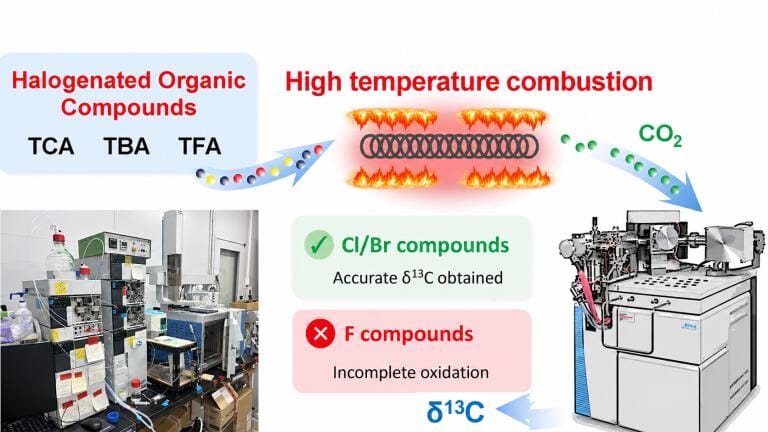
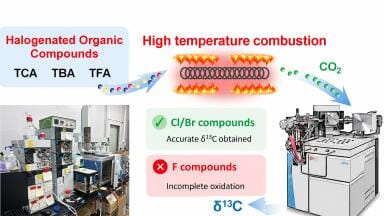
Researchers in Japan have developed a high-temperature, high-pressure combustion interface for liquid chromatography–isotope ratio mass spectrometry (LC-IRMS) which has allowed accurate carbon isotope analysis of several halogenated organic compounds.
The approach could help environmental laboratories distinguish between different sources of persistent pollutants and examine how the compounds move or change in the environment. However, its present sensitivity remains insufficient for direct analysis of many environmental samples and its performance was limited for compounds with several carbon–fluorine bonds.
Halogenated organic compounds contain one or more halogens – such as chlorine, bromine or fluorine. They include pesticides, refrigerants, industrial chemicals, disinfection by-products and perf- and polyfluoroalkyl substances (PFAS). Some resist degradation, accumulate in organisms and have raised concerns about their possible effects on human health and the environment.
Routine monitoring generally measures the concentration of a contaminant. Although this can establish how much is present, it may provide little information about where the material originated or what happened to it after its release.
Stable carbon isotope ratios can offer an additional chemical fingerprint. The ratio of carbon-13 to carbon-12 – expressed as δ¹³C – can vary according to a compound’s raw materials and production process. Measurements may therefore distinguish between separate sources of the same chemical or help researchers investigate environmental transformation pathways.
Conventional LC-IRMS presents a particular problem for halogenated compounds. The method converts carbon in the separated analyte into carbon dioxide before isotope ratio measurement but standard wet-oxidation interfaces operate at about 99 °C. These conditions may not provide sufficient oxidation of compounds with strong carbon–chlorine or carbon–fluorine bonds.
Professor Hiroto Kawashima of the Department of Bioscience and Engineering at Shibaura Institute of Technology in Koto City, Tokyo, Japan led the study with Dr. Sota Maehara also of Shibaura and Dr. Sachi Taniyasu of Japan’s National Institute of Advanced Industrial Science and Technology, Tokyo, Japan.
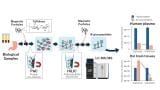
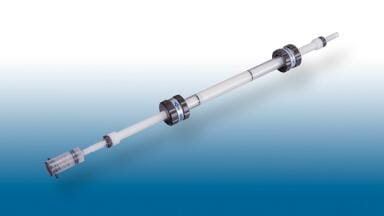
The researchers connected a liquid chromatography system and post-column pump to an isotope ratio mass spectrometer through a custom combustion interface. They modified the heater to permit high-temperature oxidation and used a back-pressure regulator to maintain the flow path at 5.2 MPa. Sodium persulphate served as the oxidant before the products were cooled and passed to the mass spectrometer.
Tests at temperatures from 300 to 600 °C showed that the system could oxidise chlorinated and brominated compounds, including trichloroacetic acid and tribromoacetic acid. At the selected operating temperature of 500 °C, measured δ¹³C values were within 0.1 per cent of reference values across both positive and negative isotope ranges. Recoveries for these compounds approached 100 per cent.
The team assessed 19 samples that represented 15 types of halogenated compound. The platform produced precise, accurate and reproducible results for chlorinated, brominated and oxidation-resistant aromatic chlorinated compounds.
Fluorinated substances proved more difficult. Compounds with one carbon–fluorine bond could be analysed but those with several such bonds produced lower recoveries and less precise isotope measurements. The researchers attributed this result to the exceptional strength and thermal stability of carbon–fluorine bonds.
Sample concentration also remains a substantial practical limitation. Under the conditions tested, measurements required a minimum concentration of approximately 500 mg/l and at least 50 to 60 nmol of carbon. Environmental concentrations of compounds such as trichloroacetic acid can fall far below this threshold, so laboratories would need an effective preconcentration procedure before the method could support direct environmental analysis.
The results also showed that separate samples of the same compound could have different δ¹³C values according to their origin and production history. This variation supports the possible use of isotope ratios for source identification, although it also means that laboratories will require suitable reference materials and source-specific datasets to interpret environmental measurements reliably.
“This system enables stable carbon isotope analysis of a wide range of halogenated compounds, providing a new tool for source identification and fate analysis,” Kawashima said.
The researchers constructed the combustion interface in-house and reported that it cost considerably less than commercial alternatives. Further work will need to increase oxidation efficiency for highly fluorinated substances, improve sensitivity and validate sample-preparation procedures for complex environmental matrices.
For further reading please visit: 10.1016/j.aca.2026.346061

 Product directory








.jpg)