Purification
As plasmid DNA (pDNA) continues to play a central role in gene therapy, mRNA production, DNA vaccines and genome editing, downstream purification has become increasingly important. Manufacturers are under constant pressure to improve productivity while maintaining stringent quality requirements, particularly regarding residual RNA levels and recovery of the supercoiled plasmid isoform.
In a new joint Application Note, Richter Biologics and YMC investigate how loading strategy influences the performance of anion exchange (AEX) chromatography during pDNA purification.
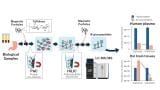
Rather than focusing solely on resin selection, the study demonstrates that process parameters can have a significant impact on purification performance. Different loading conditions were evaluated and compared for two AEX resins, with particular attention paid to step yield and RNA removal.
The results reveal an interesting trend: increasing resin loading not only maintained high recoveries but also significantly improved RNA clearance. In the case of YMC MacroSep IEX Q, high loading conditions achieved step yields of approximately 85%, while residual RNA levels were reduced to around 0.5%. Agarose gel analysis further confirmed efficient capture of plasmid DNA and enrichment of the desired supercoiled form.
These findings highlight an important concept for process developers: higher loading does not necessarily compromise product quality. When combined with the appropriate resin, optimised loading strategies can simultaneously increase productivity and improve impurity removal.
The collaboration between Richter Biologics and YMC demonstrates how careful optimisation of chromatographic parameters can unlock additional process efficiency without increasing process complexity.
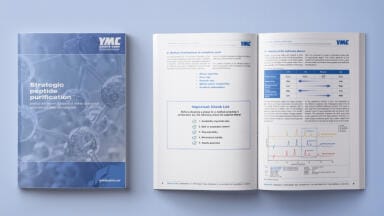
Read the full Application Note to discover:
Download the Application Note and explore how optimised loading strategies can improve both productivity and product quality in pDNA purification.

 Product directory