GC-MS
Researchers have combined GC–MS with machine learning to identify an eight-compound urinary signature that could support non-invasive bladder cancer screening and surveillance
A gas chromatography–mass spectrometry study has identified a panel of urinary volatile organic compounds that could support a non-invasive test for bladder cancer, although independent clinical validation remains necessary.
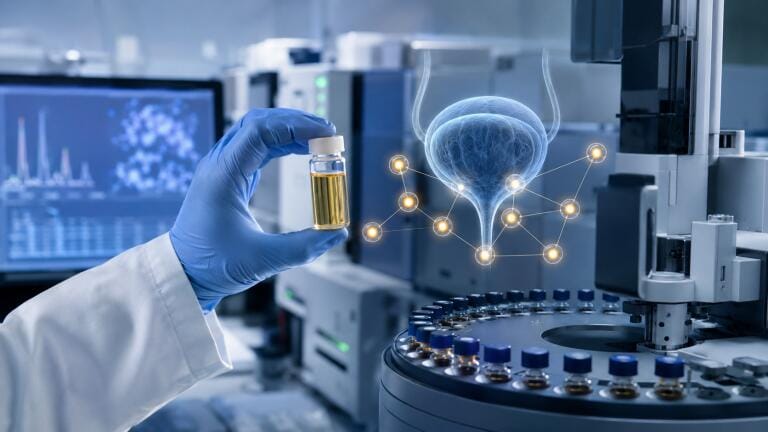
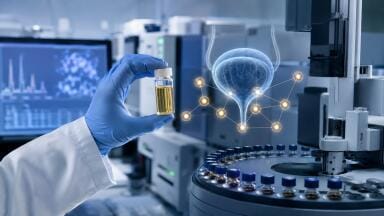
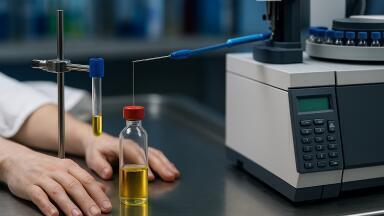
Researchers drawn from the University of the West of England, Bristol and University of Liverpool both in the UK, and the Faculty of Food Science and Nutrition, University of Life Sciences, Poznań, Poland, analysed urine from 50 patients with urothelial bladder cancer and 50 control participants. They combined liquid–liquid extraction with gas chromatography–mass spectrometry and compared several machine-learning methods to determine whether patterns of metabolites could distinguish the groups.
Cystoscopy remains central to bladder cancer diagnosis and surveillance. During the procedure, a clinician passes an instrument through the urethra to inspect the bladder. Although effective, cystoscopy is invasive, costly and uncomfortable, particularly for patients who require repeated examinations after treatment.
Urine provides an attractive source of potential biomarkers because it comes into direct contact with bladder tumours. Metabolic changes associated with disease can alter the mixture of volatile and semi-volatile organic compounds excreted in urine.
Previous volatilomics studies have often used headspace solid-phase microextraction. The researchers instead used liquid–liquid extraction, which can recover a broader range of compounds from urine but may also introduce analytical variability or extract additional matrix components.
Gas chromatography separated the compounds before mass spectrometry recorded their characteristic spectra. The team then used recursive feature elimination to reduce the number of variables and evaluated five machine-learning algorithms.
Extreme gradient boosting – commonly called ‘XGBoost’ – produced the strongest performance. An eight-compound panel distinguished cancer samples from controls with an area under the receiver operating characteristic curve of approximately 0.87.
At a balanced decision threshold, the model provided sensitivity and specificity of approximately 85 per cent. When the threshold was adjusted for a potential screening application, sensitivity reached about 95 per cent while specificity fell to approximately 70 per cent.
High sensitivity would reduce the proportion of cancers missed by a preliminary test, while lower specificity would produce more false-positive results and require additional investigation. A urinary assay might therefore serve as a triage or surveillance aid rather than replace cystoscopy.
The results also showed why multivariate analysis can be useful in metabolomics. Disease signals may reside within relationships between several compounds rather than a dramatic change in one metabolite. Conventional comparisons that assess compounds individually can overlook these coordinated patterns.
The dataset was small for machine-learning research, however, and models can perform well on development data but deteriorate when applied to patients from different hospitals or populations. Diet, medicines, smoking, infections and sample-handling conditions could also affect urinary volatile profiles.
Prospective studies must validate the eight-compound signature in larger cohorts and determine whether it can distinguish cancer from benign urinary disorders. Laboratories will also need standardised collection, storage, extraction and quality-control procedures.
The study shows that liquid–liquid extraction, gas chromatography–mass spectrometry and carefully assessed machine learning can extract potentially useful diagnostic information from complex urinary profiles. Its clinical value will depend on rigorous external validation and direct comparison with established bladder cancer tests.
For further reading please visit: 10.1038/s44276-026-00244-8

 Product directory












.jpg)