LC-MS
Published over 8 years ago. See the latest and most current information on LC-MS.
There is a well known saying — ‘You are what you eat’ — which is usually taken to mean that eating healthily helps to make you healthy. And certainly, for most people this is true alongside a modicum of physical activity. The saying is thought to have its origins in the early nineteenth century when the French lawyer and gastronome Savarin said ‘Dis-moi ce que tu manges, je te dirai ce que tu es’ or ‘tell me what you eat, and I will tell you what you are.’
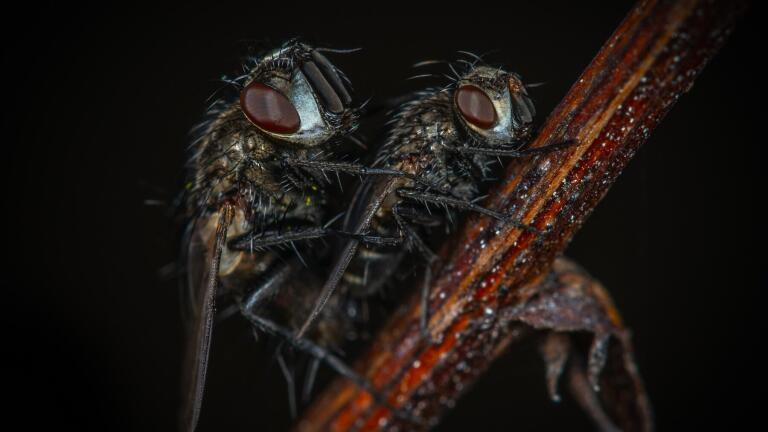
Fast forward to the twenty-first century and the motto can still be applied but this time to Phormia regina Meigen — black blow flies that feed on carcasses and faeces. But this time what the flies eat could be helping humans to track the spread of diseases. Find out how chromatography analyses the diet of blow flies to help human public health.
A team of scientist at IUPUI — Indiana University – Purdue University Indianapolis — have developed a method to help determine where blowflies have been feeding — animal tissue or animal faecal matter — which has implications for public health and animal conservation. They published their results in the journal Environmental Entomology — Chemical Assay for the Detection of Vertebrate Fecal Metabolites in Adult Blow Flies (Diptera: Calliphoridae).
By catching blowflies in the wild, it should be possible to determine which potentially harmful pathogens the blowflies are spreading. And knowing what they have been feeding on would allow scientists to know the source of any potential bacteria like E. coli. They can pick these pathogens up from eating animal’s faeces.
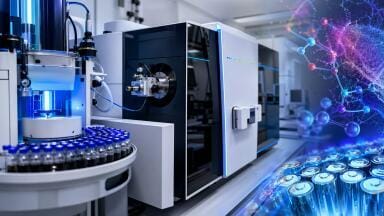
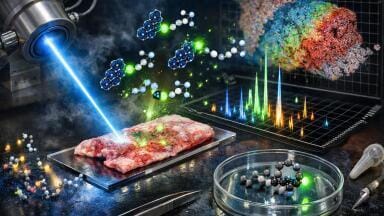
In the study the IUPUI team analysed faecal metabolites in a blow fly’s digestive tract. The team used liquid chromatography – tandem mass spectrometry to analyse faecal metabolites in the fly’s guts. Analysis of difficult samples is part of the appeal of chromatography as discussed in the article, Identification of an Unknown Constituent in Hemp-Derived Extract Using Reversed-Phase Orthogonal Methodology.
The technique they developed allows researchers to determine whether the flies had consumed faecal matter or dead vertebrate tissue. In a press release, an author on the paper stated:
‘This is an important finding not only so we can learn more about blow fly behavior when they are not on carcasses, but also how blow flies fit within our own communities. Typically, it has been very difficult to tell what bacteria the flies are carrying.’
The work shows that scientists can now detect faecal matter in a fly’s guts that will allow scientists plot the route of transmission of pathogens. Chromatography in the service of public health.

 Product directory