Industrial news
Waters Corporation has launched biphenyl liquid chromatography columns with reduced ultraviolet bleed and extended pH stability to improve separation of aromatic compounds across pharmaceutical, bioanalytical, and environmental workflows
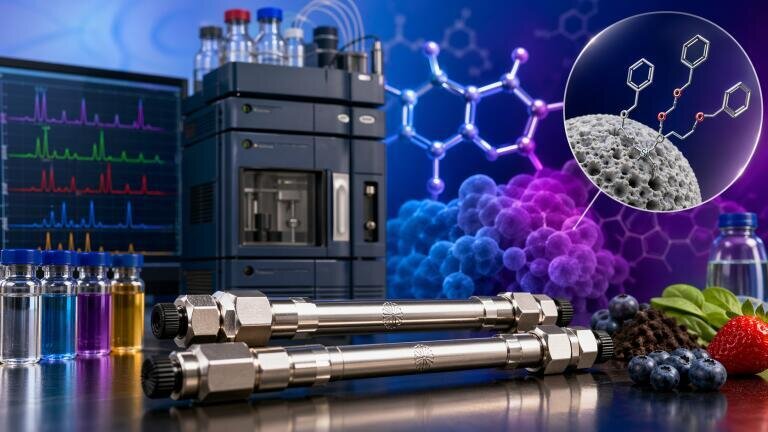
Waters Corporation has introduced next-generation Acquity™ and XBridge™ Biphenyl liquid chromatography columns with MaxPeak™ Premier Technology, designed to enhance aromatic selectivity while reducing ultraviolet bleed and maintaining stability across a broad pH range. The columns will support liquid chromatography and liquid chromatography–mass spectrometry workflows in small molecule pharmaceutical method development, bioanalysis, and food and environmental testing.
The columns have been built on the company’s Ethylene Bridged Hybrid particle platform, paired with inert surface engineering through MaxPeak Premier Technology. This combination aims to deliver consistent chromatographic performance, with reproducibility across both development and routine analytical settings. According to Waters, the biphenyl phase provides an alternative selectivity profile to conventional octadecylsilane and phenyl stationary phases, with improved resolution of aromatic and structurally similar compounds while maintaining stable baselines.
Method development for aromatic analytes has often depended on the interplay between mobile phase pH and stationary phase chemistry. Existing biphenyl phases have presented recognised limitations, including elevated ultraviolet background signal, constrained pH tolerance, and variability between manufacturing batches. These factors have the potential to affect sensitivity, quantitative accuracy and reproducibility. Waters has stated that its latest columns have addressed these issues through a reduction in ultraviolet bleed by at least an order of magnitude – particularly under acidic conditions – thereby supporting accurate quantification at low analyte concentrations.
The columns have operated across a usable pH range of 1.5 to 10, which has allowed analysts to explore method conditions without compromising column integrity or performance. Batch-to-batch reproducibility has also been emphasised as a key design feature, with the intention to ensure consistent retention and selectivity characteristics throughout the lifecycle of an analytical method.
This performance has been attributed to a trifunctionally bonded biphenyl stationary phase, engineered on a 130 Å ethylene-bridged hybrid particle substrate. The design has sought to improve phase stability and reduce ligand loss across the full pH spectrum. The resulting chemistry has delivered a balance between hydrophobic and aromatic interactions, with enhanced π–π interactions to improve retention and separation of aromatic compounds, including positional and structural isomers that have historically proved difficult to resolve.
In parallel, adding MaxPeak Premier High Performance Surfaces to the column hardware has introduced an inert hybrid surface that reduces analyte interaction with metal components. This has improved analyte recovery and sensitivity, while also limiting artefacts such as metal adduct formation in mass spectrometry. The approach has aimed to provide reliable performance without the need for extensive system conditioning or modification.
A spokesperson for Waters said: “These columns have been designed to remove the compromises that analysts have had to accept with biphenyl chemistries, particularly where ultraviolet sensitivity and pH flexibility have limited method development options.”
By integrating biphenyl selectivity with reduced ultraviolet background signal, extended pH tolerance, and inert surface technology, Waters has presented the Acquity and XBridge Biphenyl columns as a robust platform for analytical laboratories. The company has indicated that the technology supports both method development and long-term routine use, with the potential to improve confidence in chromatographic data across a range of application areas.

 Product directory

























.jpg)