Sample preparation
Per- and polyfluoroalkyl substances (PFAS) have become a major focus of environmental monitoring due to their persistence, widespread use, and potential impact on human health. As regulatory frameworks evolve, environmental laboratories are increasingly required to perform accurate determination of PFAS in complex matrices such as soils, sediments, biosolids, and tissues.
EPA Method 1633A establishes a standardized analytical workflow for the determination of PFAS using LC-MS/MS. While chromatographic and mass spectrometric detection are highly sensitive and selective, the overall reliability of the method strongly depends on the quality and reproducibility of sample preparation.
For solid matrices in particular, extraction represents a significant bottleneck in the analytical workflow. The conventional procedure described in EPA Method 1633A relies on shaker-table extraction using ammoniacal methanol, involving multiple extraction cycles, centrifugation steps, and transfers between vessels. This procedure can require approximately three hours per batch and introduces several potential sources of variability, including incomplete solvent penetration and losses during manual handling.
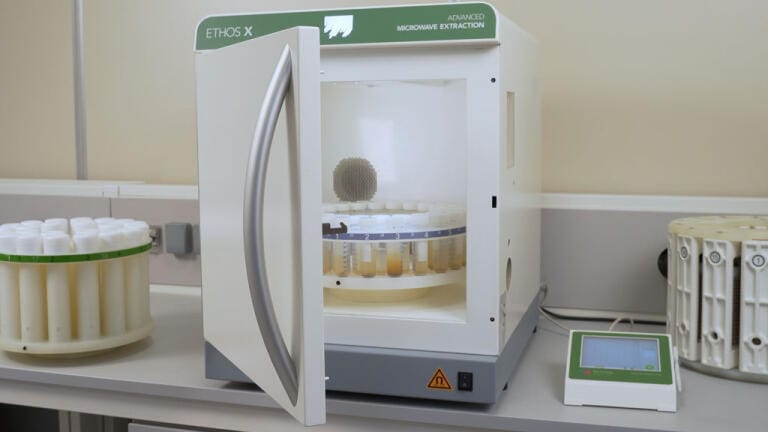
In response to these limitations, microwave-assisted extraction (MAE) is increasingly being evaluated as an alternative approach for PFAS sample preparation. By combining controlled heating with active stirring inside sealed polypropylene vessels, MAE enhances solvent–matrix interactions and accelerates analyte desorption from solid samples.
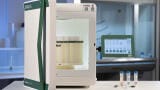
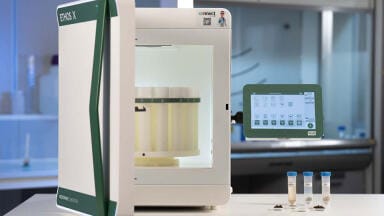
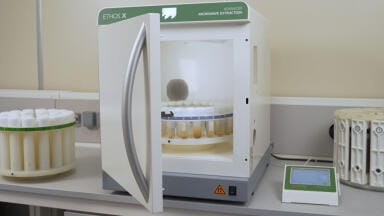
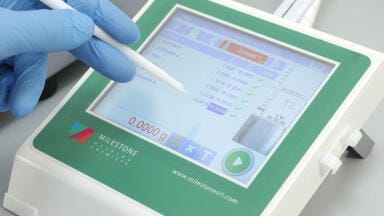
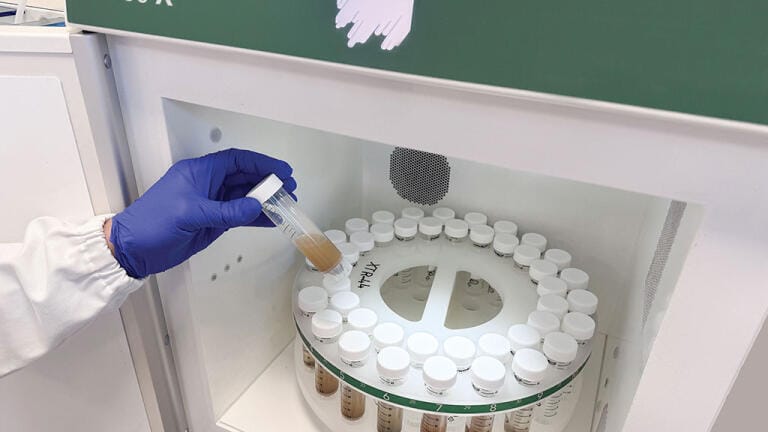
A validation study performed by Advanced Environmental Laboratories (https://aellab.com) investigated the performance of microwave extraction using the ETHOS™ X system equipped with the XTR-44 rotor. The method heats samples to 65 °C in the presence of ammoniacal methanol while active stirring promotes homogeneous extraction conditions. The extraction step is completed in approximately 15 minutes, followed by a short cooling period prior to centrifugation.
Compared with the shaker-table procedure, the microwave approach reduces the extraction time by roughly 75 %, enabling significantly higher throughput for laboratories processing large environmental sample sets. In addition, the XTR-44 rotor allows simultaneous extraction of up to 44 samples per batch, supporting routine high-volume PFAS analysis.
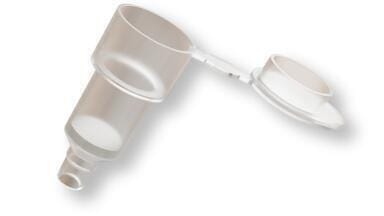
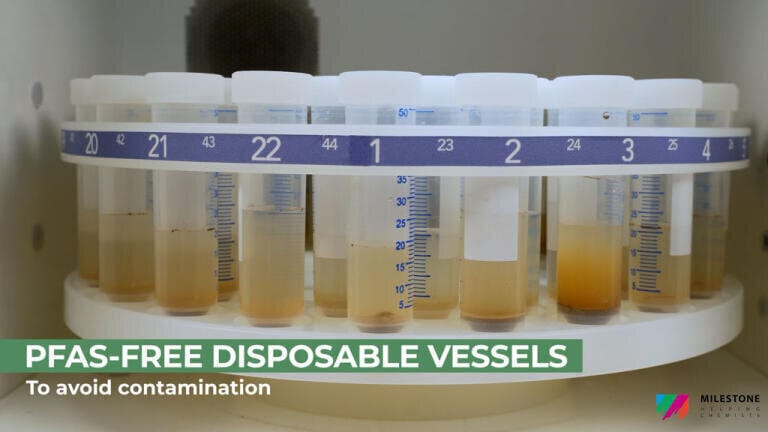
Maintaining samples within the same polypropylene tube throughout the extraction process also minimizes the risk of contamination and carry-over. The use of PFAS-free disposable vessels further reduces the need for extensive cleaning procedures and helps ensure analytical reliability.
Analytical validation demonstrated that microwave extraction delivers results comparable to the conventional shaker-table method across a wide range of PFAS compounds. Recoveries, precision, and reproducibility all met the acceptance criteria defined by EPA Method 1633A, confirming that the approach provides a compliant alternative for PFAS extraction from solid matrices.
By shortening sample preparation times while maintaining analytical performance, microwave-assisted extraction can help laboratories streamline PFAS workflows and improve overall efficiency in LC-MS/MS-based environmental analysis.

 Product directory