Liquid chromatography
Novogene Europe has expanded the capabilities of its Cambridge omics centre with the introduction of an untargeted metabolomics service, allowing researchers to combine metabolite profiling with genomic, transcriptomic and microbiome analyses to investigate biological function and disease mechanisms
Novogene Europe has expanded its multiomics research services with the launch of an untargeted metabolomics service at its Cambridge omics centre, extending the company’s analytical capabilities beyond genomics and transcriptomics to include comprehensive metabolite profiling.
The service allows researchers to investigate the small molecules produced during cellular metabolism and integrate these data with genomic, transcriptomic and microbiome datasets. Because metabolites represent the products of cellular activity, metabolomics can provide insight into the biochemical processes that underlie physiology and disease, helping researchers relate molecular measurements to biological function.
Untargeted metabolomics differs from targeted approaches by seeking to detect as many metabolites as possible within a sample rather than measure a predefined group of compounds. This discovery-based strategy enables researchers to identify previously unrecognised biochemical changes and explore metabolic pathways associated with disease, treatment response, host-microbiome interactions and biomarker discovery.
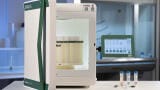
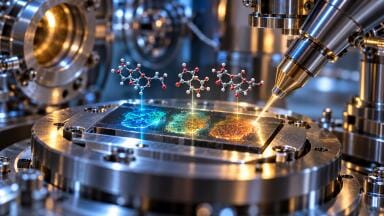
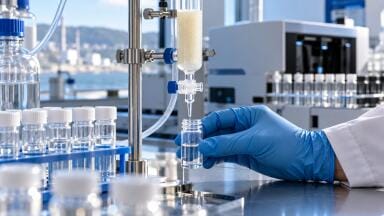
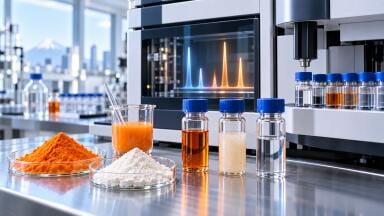
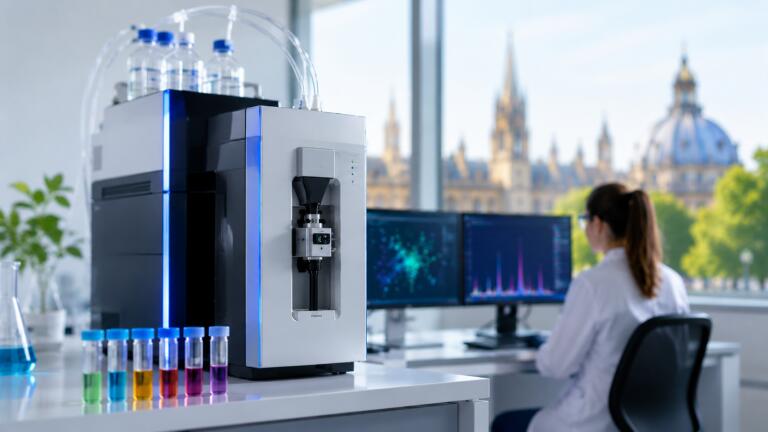
Novogene Europe said the workflow was built around a Thermo Scientific Vanquish ultra-high-performance liquid chromatography system coupled with an Orbitrap Exploris 120 high-resolution accurate-mass mass spectrometer. Liquid chromatography separates complex mixtures of metabolites before mass spectrometry measures their mass-to-charge ratios with high precision, allowing researchers to detect and identify hundreds to thousands of metabolites across suitable biological sample types. The platform also draws on an extensive reference library to support metabolite identification and downstream biological interpretation.
The company said the service complemented its existing capabilities in genomics, transcriptomics, sequencing and bioinformatics, allowing researchers to generate integrated multiomics datasets from a single research partner. Such approaches have become increasingly important because complex biological processes rarely depend on a single molecular layer. Instead, researchers often combine genomic, transcriptomic, proteomic and metabolomic information to build a more complete picture of cellular function.
The metabolomics platform marks the first stage of a broader expansion of scientific capabilities at Novogene Europe’s Cambridge omics centre, located within the Bio-Innovation Centre in Cambridge. The facility forms part of one of the UK’s best-established life science clusters, bringing advanced omics technologies closer to academic researchers as well as biotechnology and biopharmaceutical companies.
“As research questions have become more complex, customers have increasingly needed to connect genomic and transcriptomic information with functional biochemical insight. Metabolomics has added a powerful layer to this picture, helping researchers explore disease mechanisms, microbiome interactions, treatment response and pathway biology,” said Tingting Zhou, vice president of Novogene Europe.
“This launch has also reflected Novogene’s continued evolution from a trusted sequencing service provider into a broader multiomics partner. During our 15th anniversary year, it has been especially meaningful to expand our capabilities in Cambridge and continue to support academic, biotechnology and biopharmaceutical researchers with high-quality data generation, bioinformatics and scientific expertise across Europe,” she added.
“Cambridge has a long-standing reputation as a centre for life science innovation, and access to advanced omics capabilities has formed an important part of that ecosystem,” said Dr. David Chaplin, general manager of the Bio-Innovation Centre.
“We welcomed Novogene Europe’s continued investment in the Cambridge omics centre and its development of metabolomics services to support researchers and companies working at the forefront of biological discovery,” he said.
Novogene Europe said the launch reflected its strategy to provide integrated support across the research workflow, from experimental design and data generation to bioinformatics and biological interpretation, as demand for multiomics approaches continues to grow across academic and industrial life science research.

 Product directory