Supercritical fluid (SFC), green chromatography
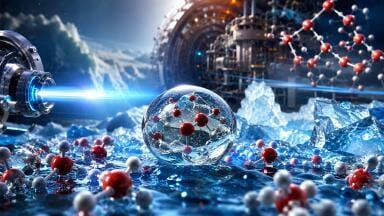
Scientists have reported the first direct observation of water’s liquid-liquid critical point, a long-theorised phenomenon believed to underpin many of water’s anomalous physical properties. By combining ultrafast X-ray free-electron laser analysis with advanced supercritical fluid and low-temperature measurement techniques, the international team has resolved one of the most persistent questions in physical chemistry
Researchers at POSTECH, Pohang, South Korea and Stockholm University, Sweden, have reported the first direct observation of water’s liquid-liquid critical point, a milestone that could reshape scientific understanding of one of the most important substances in nature. The findings have addressed a decades-long debate concerning the molecular origin of water’s unusual physical behaviour.
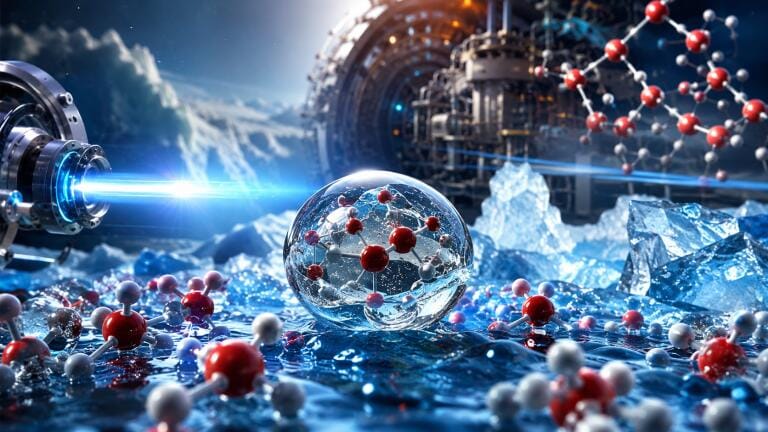
Water exhibits several anomalous properties that distinguish it from almost every other liquid. Unlike most substances, it reaches its maximum density at 4°C rather than at its freezing point. Ice also floats because solid water is less dense than its liquid form, an apparently counterintuitive feature that has proved essential for the emergence and persistence of life on Earth. Scientists have long suspected that these properties arise because water can exist in two distinct liquid states under deeply supercooled conditions.
For decades, researchers proposed that these two forms converged at a theoretical liquid-liquid critical point. At this point, the distinction between the two liquid phases disappears and water enters a supercritical state in which the molecular structures become indistinguishable. Although theoretical models and computational simulations strongly supported the concept, direct experimental evidence remained elusive because liquid water freezes extremely rapidly within the required temperature range.
The research team, led by Professor Kyung Hwan Kim of the department of chemistry at POSTECH in collaboration with Professor Anders Nilsson of the department of physics at Stockholm University, focused on the so-called ‘no-man’s-land’ region between approximately −40°C and −70°C. In this regime, conventional analytical techniques cannot capture water’s molecular structure before crystallisation occurs.
To overcome this limitation, the investigators employed an X-ray free-electron laser, or XFEL, at the Pohang Accelerator Laboratory. XFEL instruments generate exceptionally intense ultrashort X-ray pulses capable of recording molecular-scale structural changes within femtoseconds. This allowed the team to examine liquid water before ice formation could disrupt the measurements.
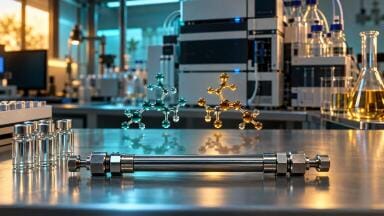
Chromatographic science also played an important conceptual and methodological role in the broader investigation of phase behaviour and molecular organisation. The study drew attention to the increasing importance of supercritical fluid chromatography as a research tool in physical chemistry and materials science. Supercritical fluid chromatography uses a substance above its critical temperature and pressure as the mobile phase – most commonly carbon dioxide – which combines gas-like diffusivity with liquid-like solvating power. This enables highly efficient molecular separation with rapid mass transfer and exceptional sensitivity to subtle structural changes.
In studies of complex molecular systems, supercritical fluid chromatography can help researchers distinguish closely related molecular conformations and transient structural states that prove difficult to resolve through conventional liquid chromatography alone. The technique has become particularly valuable in investigations of phase transitions, supramolecular interactions and metastable materials because it permits precise control of pressure and temperature while reducing thermal degradation of sensitive samples. In the present work, the principles underlying supercritical phase analysis helped inform interpretation of water’s transition into a supercritical liquid regime at ultralow temperatures.
The team’s achievement followed more than a decade of progressive experimental refinement. In 2017, the researchers demonstrated for the first time that liquid water could remain unfrozen and accessible to direct analysis down to −45°C. That work challenged the assumption that the deeply supercooled region could not undergo experimental investigation. In 2020, the group extended the approach further by using amorphous ice to generate liquid water at temperatures approaching −70°C. Those experiments provided early evidence that water could adopt two separate liquid configurations under extreme conditions.
The latest study has now supplied the clearest evidence yet that the hypothesised critical point genuinely exists. By systematically track temperature- and pressure-dependent structural changes in water, the investigators identified a transition near −60°C at which the distinction between the two liquid phases disappeared. The researchers concluded that this point represented the long-sought liquid-liquid critical point.
The work has implications far beyond theoretical chemistry. Water’s anomalous behaviour influences atmospheric physics, climate systems, cryobiology, planetary science and the stability of biological macromolecules. A clearer understanding of water’s phase behaviour could therefore influence fields ranging from protein folding and cell preservation to environmental modelling and astrophysics.
“The intense debate in the scientific community, spanning many years, over water’s unusual properties and a liquid-liquid critical point has finally been brought to a close,” said Kyung Hwan Kim.
“This discovery will serve as a starting point for uncover the essential roles water plays in living systems and in a wide range of natural phenomena,” he added.
The study has also highlighted how advanced analytical platforms continue to transform experimental chemistry. The integration of ultrafast X-ray spectroscopy, low-temperature molecular analysis and concepts derived from supercritical fluid chromatography has enabled researchers to investigate transient states of matter previously considered inaccessible. Scientists have increasingly viewed such hybrid analytical approaches as essential to probe dynamic molecular systems that exist only for extremely short timescales.
By convert a long-standing theoretical proposal into experimentally supported evidence, the researchers have established a framework that may influence physical chemistry textbooks and future investigations into the molecular origins of life-supporting phenomena.
For further research please visit: 10.1126/science.aec0018


 Product directory