LC-MS
Background
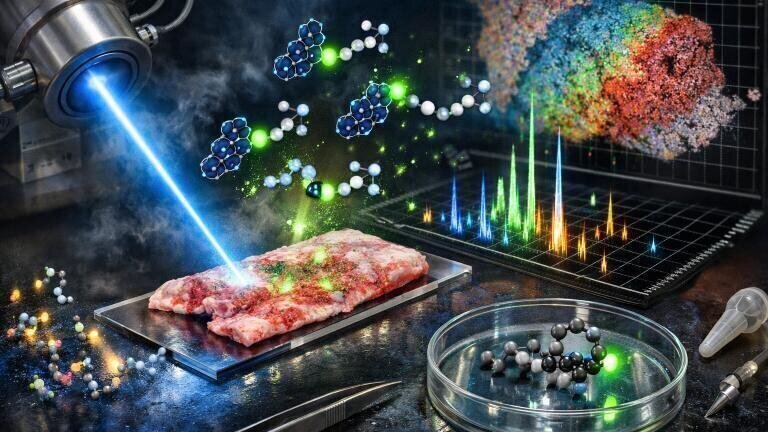
Proteolytic processing is a fundamental post-translational modification. Liquid chromatography–tandem mass spectrometry (LC–MS/MS) workflows are powerful for degradomic analyses but inherently sacrifice spatial information, a critical aspect for investigating biological systems such as aberrant extracellular matrix remodeling and alterations of the tumor microenvironment. Matrix-assisted laser desorption/ionization (MALDI) offers potential for fast spatial profiling, but MALDI imaging of tryptic peptides is still challenged by spectral crowding and restricted abilities for MALDI MS/MS identification.
Methods
To address these limitations, we developed pyrene-conjugated 2-pyridinecarboxaldehyde (pyr-2PCA) tags for selective N-terminal labeling and enhanced detection sensitivity. The 2PCA reagent exclusively modifies N-terminal α-amines, not lysine ε-amines, as could be confirmed in MALDI-MS, with concentration-dependent side reactions minimized by dilution. A distinct reporter ion produced by 2PCA-labeled peptides in prm-PASEF (MALDI MS/MS) serves as a unique marker for successful labeling.
Results
The covalent conjugation of 2PCA with a pyrene structure results in the pyr-2PCA tag that enables matrix-free, label-assisted laser desorption ionization mass spectrometry (LALDI-MS) measurements of peptides. We demonstrate that labeling with a pyrene-coupled 2PCA tag (pyr-2PCA) prior to tryptic digestion results in the selective detection of N-terminal peptides in LALDI, with no significant off-target labeling.
Conclusions
This study presents the first presentation and characterization of this novel pyr-2PCA tag, thereby laying the groundwork and demonstrating its future potential for MALDI/LALDI-based in situ spatial N-terminomics to study proteolytic processes.
To read the complete article click here:

 Product directory