LC-MS
Advanced liquid chromatography coupled with mass spectrometry has confirmed more than 95 per cent removal and transformation of persistent pollutants by a solar-active zirconium metal–organic framework developed at the Federal University of São Carlos
A Brazilian study has used liquid chromatography to show high-efficiency solar-driven degradation of persistent water contaminants using a zirconium-based metal–organic framework (MOF). Researchers relied on advanced chromatographic analysis to verify not only pollutant removal but also chemical transformation into less toxic intermediates, a distinction critical in environmental chemistry.
The work brought together investigators from the Center for Development of Functional Materials, a Research, Innovation and Dissemination Center supported by the São Paulo Research Foundation and based at the Federal University of São Carlos, São Paulo state, Brazil. The findings follow global scientific attention on MOFs in 2025 with recognition of the Nobel Prize for the field’s foundational architecture in the work of Susumu Kitagawa, Richard Robson and Omar Yaghi.
MOFs consist of metal ions or clusters linked by organic ligands to form highly porous crystalline networks. Their large internal surface areas and adjustable pore environments have attracted sustained interest for catalysis, gas storage and pollutant capture. Yet demonstration of real chemical degradation, rather than simple adsorption, requires robust analytical confirmation. In this study, liquid chromatography coupled with mass spectrometry provided that evidence.
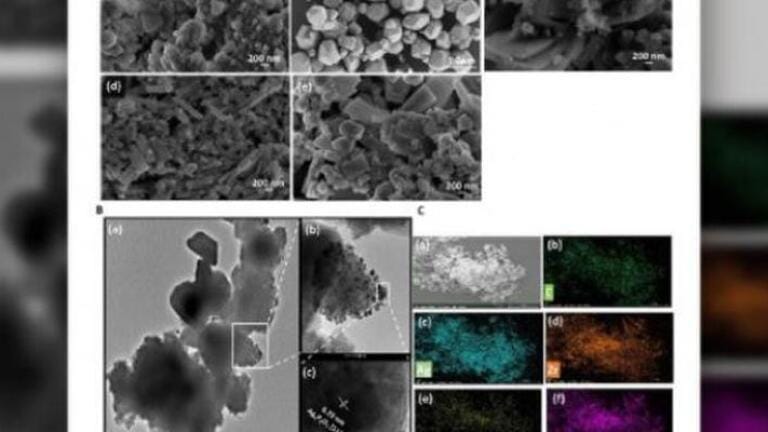
The Brazilian team designed a heterostructure that combined a chemically stable zirconium MOF with silver pyrophosphate which is a semiconductor. The composite absorbed sunlight and facilitated separation of photoinduced electrical charges. Under irradiation, it generated reactive oxygen species capable of oxidisation to break down industrial dyes and antibiotic residues in water. Such contaminants persist in effluents from manufacturing and healthcare settings and can contribute to ecological toxicity and antimicrobial resistance.
To determine whether degradation had truly occurred, the researchers analysed treated samples with high-resolution liquid chromatography linked to mass spectrometry. This approach separated complex mixtures into discrete chemical components and identified molecular fragments with high specificity. Chromatographic peaks corresponding to parent contaminants declined sharply after treatment. At the same time, mass spectrometric data confirmed formation of intermediate compounds with altered structures and reduced toxicity profiles.
Removal efficiencies exceeded 95 per cent across several model pollutants. Crucially, chromatographic analysis distinguished between adsorption onto the catalyst surface and chemical transformation within solution. Without such separation and identification, apparent ‘removal’ could simply reflect temporary retention rather than destruction of hazardous molecules. The chromatographic workflow underpinned the study’s central claim.
Phytotoxicity assays complemented the analytical chemistry where treated solutions exhibited substantially lower toxicity toward plant models than untreated controls. These biological findings underscored by the chromatographic data and reinforced the conclusion that the process converted harmful contaminants into less damaging forms.
The team also applied the Six-Flux model, a radiative transfer framework that quantifies photon absorption and scattering in heterogeneous systems. Results indicated that the composite absorbed nearly seven times more photons in the visible region than in the ultraviolet range. Because visible light constitutes the dominant component of solar radiation at the Earth’s surface, this characteristic supports the prospect of solar-powered water treatment without the need for reliance on ultraviolet lamps.
Zirconium-based MOFs have attracted attention because of their resilience in aqueous and acidic conditions. Environmental treatment systems must withstand variable pH and complex mixtures. By integrating this stable framework with a semiconductor that enhances charge separation, the researchers sought to address two persistent challenges in photocatalysis:
The prominence of liquid chromatography in this work reflects a broader trend in environmental materials science. As catalytic materials grow more sophisticated, analytical methods must match that sophistication to provide unequivocal evidence of chemical transformation. Chromatography, particularly when coupled with mass spectrometry (LC-MS) has become indispensable to trace-level detection in complex aqueous matrices.
The study contributes to expanding evidence that MOF-based heterostructures can function as practical platforms for sustainable water purification. Laboratory-scale data cannot guarantee immediate industrial deployment. However, the combination of solar responsiveness, chemical stability and chromatographically-verified degradation strengthens the case to scale-up evaluation.
For further reading please visit: 10.1002/adsu.202501297



 Product directory





















.jpg)