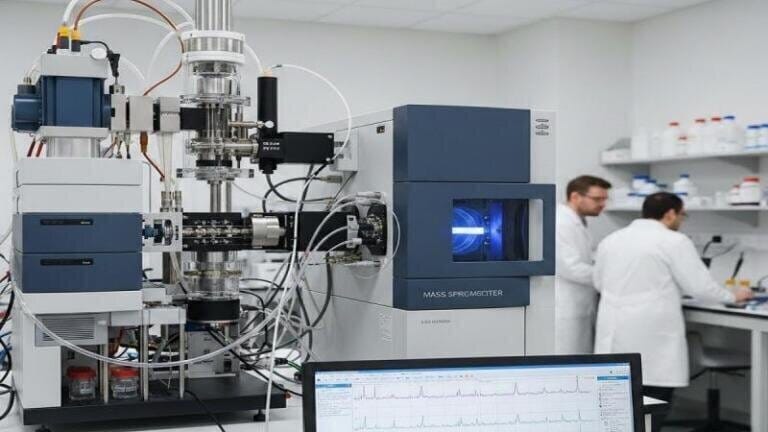
LC-MS
The global liquid chromatography-mass spectrometry market is projected to rise to US$ 19 billion by 2032, as pharmaceutical research, clinical diagnostics and food safety regulation continue to drive demand for high-resolution analytical platforms
The global liquid chromatography-mass spectrometry market is projected to top US$ 19 billion by 2032, according to industry analysis by www.datamintelligence.com. This trajectory reflects a compound annual growth rate of more than 13 per cent between the end of 2025 and 2032 and this signals sustained expansion across pharmaceutical, biotechnology and other healthcare sectors.
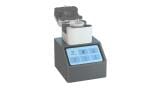
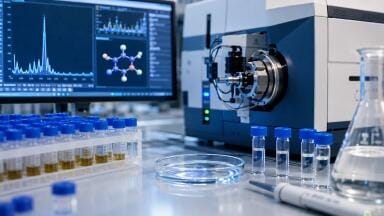
Liquid chromatography-mass spectrometry (LC-MS) integrates two analytical techniques. Liquid chromatography separates complex mixtures into individual components, while mass spectrometry measures the mass-to-charge ratio of ionised molecules to identify and quantify them. Together, these techniques provide high sensitivity and selectivity, which make the platform indispensable for drug discovery, environmental monitoring, personalised medicine and clinical diagnostics.
Rising research and development investment has underpinned this growth. Pharmaceutical and biotechnology companies continue to allocate substantial budgets to compound characterisation, pharmacokinetic profiling and biomarker validation. LC-MS remains central to these activities because it can detect trace analytes within complex biological matrices such as blood plasma or tissue extracts.
Technological refinement has broadened the scope of application. Hybrid mass spectrometers, high-resolution instruments and automated sample handling systems have improved sensitivity, resolution and throughput. High-resolution platforms, including Orbitrap and time-of-flight architectures, have enabled laboratories to achieve accurate mass measurements that distinguish closely related molecular species. Integration of advanced data processing software and laboratory automation has further strengthened reproducibility and analytical confidence, particularly in regulated environments.
Several manufacturers have introduced systems that illustrate this trend. In February 2026, Thermo Fisher Scientific Inc. expanded production in North America and launched a high-resolution Orbitrap LC-MS system to support high-throughput drug discovery and proteomics workflows. In January 2026, Agilent Technologies, Inc. released an upgraded triple quadrupole LC-MS platform with enhanced sensitivity and automated sample handling to serve clinical research and pharmaceutical quality control laboratories.
In December 2025, Bruker introduced an integrated LC-MS solution tailored for metabolomics and lipidomics research within academic and biotechnology settings. Earlier in the autumn, SCIEX presented a next-generation LC-MS/MS system for environmental testing and food safety surveillance, with improved detection limits for contaminants and residues.
Furthermore, in October 2025, Shimadzu released advanced LC-MS instruments with faster data processing and improved resolution to target pharmaceutical and clinical diagnostic laboratories. And in September 2025, Waters expanded deployment of high-resolution LC-MS systems across clinical research laboratories and biopharmaceutical development centres in Asia-Pacific.
Regionally, North America accounts for approximately 45 per cent of global revenue. Strong pharmaceutical and biotechnology clusters, high healthcare expenditure and sustained investment in research infrastructure have reinforced adoption of advanced analytical platforms. Europe represents around 30 per cent of the market, supported by rigorous regulatory frameworks and established life sciences hubs in Germany, the UK and France. And Asia-Pac is close to 20 per cent experiencing recent growth as healthcare infrastructure expands in China, India and Japan, particularly as regional pharmaceutical manufacturing capacity increases.
Demand from food safety and regulatory compliance has also intensified. Stricter oversight of contaminants, additives and residues has required laboratories to adopt highly sensitive and selective analytical methods. LC-MS enables precise identification and quantification of trace compounds within complex food matrices, which supports accurate labelling and efforts to counter food fraud. Triple quadrupole and time-of-flight systems have improved reliability in routine screening, which helps laboratories meet regulatory standards and strengthen consumer confidence.
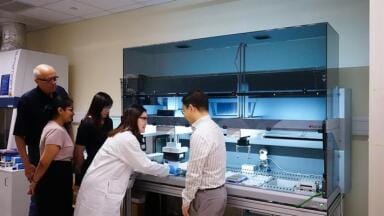
Despite this positive outlook, cost remains a constraint. LC-MS systems require significant capital investment, and ongoing expenditure on consumables, reagents and maintenance adds to operational burden. Laboratories must also allocate resources to train specialist staff capable of instrument calibration, data interpretation and method validation. These financial demands can limit uptake among smaller institutions, educational laboratories and organisations in lower-income regions.
Segment analysis shows that time-of-flight systems account for approximately 30 per cent of the technology market, reflecting their capacity to deliver high-resolution mass measurements. Quadrupole time-of-flight platforms contribute around 25 per cent because they combine qualitative and quantitative capability within a single instrument. Hybrid systems represent about 20 per cent, while ion trap instruments hold close to 15 per cent. Emerging benchtop and miniaturised platforms comprise the remaining share.
Application trends reveal that drug discovery and development represent nearly 35 per cent of demand, followed by clinical diagnostics at 25 per cent. Environmental testing contributes around 15 per cent, forensic analysis 10 per cent, and pharmaceutical and biotechnology quality control approximately 15 per cent. Academic research institutions account for about 30 per cent of end-user adoption, with contract research organisations at 25 per cent, biopharmaceutical companies at 20 per cent, hospitals and diagnostic centres at 15 per cent, and pathology and forensic laboratories each at roughly 5 per cent.
Taken together, sustained research investment, regulatory pressure and technological refinement have positioned LC-MS as a cornerstone analytical platform within modern life sciences.

 Product directory