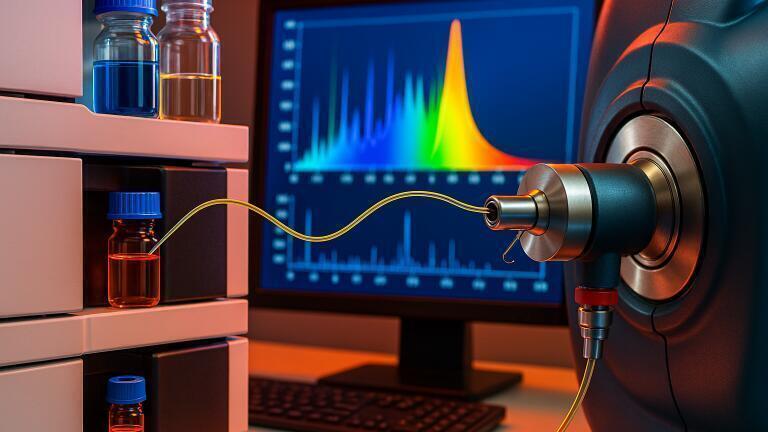
LC-MS
Liquid chromatography coupled with mass spectrometry has become central to forensic laboratories worldwide. Recent work has shown how ultrahigh-pressure LC–MS, machine learning and refined chromatographic methods can improve postmortem interval estimation, support confident identification of potent synthetic opioids and distinguish hemp from marijuana with greater reliability
Liquid chromatography (LC) – most often coupled with mass spectrometry (MS) – has become a cornerstone of contemporary forensic science. The combination of high sensitivity, chemical selectivity and method flexibility has allowed LC–MS platforms to address questions that range from more precise estimation of the time of death to the identification of emerging synthetic drugs and differentiation of legally compliant hemp from criminally-controlled cannabis.
One line of recent work, led by Dr. Ida Marie Marquart Løber at Aarhus University in Denmark, has focused on more objective estimation of the postmortem interval (PMI). Classical PMI estimates rely on physiological parameters, such as body temperature and visible signs of decomposition, which are subjective and vulnerable to environmental variation.
Løber instead used ultrahigh-pressure liquid chromatography–quadrupole time-of-flight mass spectrometry (UHPLC–QTOF-MS) in combination with machine learning (ML) to track biochemical changes in blood, brain, muscle and eye fluid from decomposing rat models and relate those changes to the elapsed time since death. ML applied to these metabolomic data reduced the complex signals to compact biomarker panels and predictive models.
“We narrowed it down to just 15 biomarkers per tissue,” said Løber, who reported typical error margins of between 3 to 6 hours, a refinement relative to many conventional PMI methods. She has emphasised that this strategy anchors PMI estimation in quantifiable chemical markers and so has the potential to reduce examiner variability, although she has also stressed that translation from rat models to human cadavers will require extensive additional data and validation.
Dr. J. Tyler Davidson at Sam Houston State University in the United States has addressed a different challenge: the reliable identification of nitazene analogues, a rapidly expanding class of highly potent synthetic opioids linked to fatal overdoses in several countries. Many nitazene derivatives share very similar core structures, and small modifications to side chains can yield compounds with distinct pharmacological and legal profiles, which makes them hard to separate by traditional gas chromatography–electron ionisation–mass spectrometry (GC–EI–MS). Davidson’s group therefore analysed 38 nitazene analogues using liquid chromatography–electrospray ionisation–tandem mass spectrometry (LC–ESI–MS/MS) to define characteristic fragmentation routes and diagnostic product ions. Chromatographic separation reduced matrix interference, while soft ionisation preserved the protonated molecular ion [M+H]+ and a limited set of informative fragments.
The work identified recurring diagnostic ions associated with substituents on amine or benzyl groups and more distinctive ions from piperidine or pyrrolidine rings; for analogues with a methoxy substituent on the phenyl ring, a fragment at m/z 121 emerged as a useful marker for targeted multiple reaction monitoring (MRM) or precursor ion scan (PIS) methods. Davidson has argued that LC–ESI–MS/MS complements rather than replaces GC–EI–MS and that broad data sharing and open spectral libraries will be essential to keep pace with novel nitazene derivatives that enter circulation with no reference spectra or certified standards.
Across these three studies, a consistent theme has emerged: the integration of advanced LC–MS instrumentation with data-rich, model-based or method-optimised workflows to resolve persistent forensic uncertainties. In PMI estimation, UHPLC–QTOF-MS metabolomic profiles combined with ML have supported more precise and transparent time-of-death estimates. In the context of synthetic opioids, LC–ESI–MS/MS has augmented GC–EI–MS to provide molecular-weight information and diagnostic fragmentation that help laboratories differentiate closely related nitazene analogues.
For cannabis regulation, carefully tuned LC–PDA methods have improved the separation and quantitation of key cannabinoids and so have made it easier to distinguish hemp from marijuana in a way that aligns with statutory thresholds. Collectively, these efforts have shown how high-resolution LC–MS platforms, computational models and shared spectral resources can yield forensic evidence that is more sensitive, more objective and more reproducible.

 Product directory