LC-MS
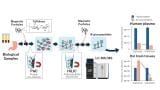
While remifentanil, etomidate, and rocuronium are increasingly used for cesarean section due to their favorable hemodynamic stability and fetal safety profile, their pharmacokinetics and potential effects on neonates remain poorly understood. This study developed and validated a rapid, sensitive LC–MS/MS method for simultaneous quantification of the three anesthetics in microsamples of 10 μl serum, followed by a paired maternal and umbilical cord serum investigation. After protein precipitation with acetonitrile, analytes were separated within 4 min using positive electrospray ionization in MRM mode. Method validation demonstrated excellent linearity (R2 > 0.99) for all compounds, with LLOQs of 0.15 ± 0.02 ng/mL (remifentanil), 16.87 ± 0.51 ng/mL (etomidate), and 106.73 ± 8.63 ng/mL (rocuronium). Precision (intra-/inter-day < 15%) and minimal carry-over (< 5%) met bioanalytical standards. Applied to 20 maternal-newborn pairs, the method quantified differential drug distribution: maternal arterial concentrations (remifentanil 4.75 ± 0.19 ng/mL; etomidate 412.71 ± 35.29 ng/mL; rocuronium 7.08 ± 0.48 μg/mL) exceeded umbilical vein levels (2.43 ± 0.13 ng/mL; 302.15 ± 29.03 ng/mL; 0.86 ± 0.16 μg/mL), which were higher than umbilical artery concentrations (1.33 ± 0.15 ng/mL; 166.24 ± 21.53 ng/mL; 0.44 ± 0.77 μg/mL). Calculated placental transfer rates significantly differed among anaesthetics (remifentanil 0.52 ± 0.02; etomidate 0.75 ± 0.04; rocuronium 0.13 ± 0.02; all P < 0.001), reflecting distinct pharmacokinetic behaviours. The validated method enables reliable microvolume analysis for perinatal pharmacokinetic studies, particularly valuable when sample availability is limited. Its rapid throughput and sensitivity make it suitable for clinical research applications investigating maternal–foetal drug transfer dynamics.
Recently, induction of anaesthesia using propofol, rocuronium, and remifentanil are becoming popular. Compared with propofol, etomidate has minimal impact to haemodynamics with low fluctuation of blood pressure and cardiac rhythm. Therefore, the three anaesthetics remifentanil, etomidate, and rocuronium are another choice for caesarean section, especially for pregnant women who have cardiovascular problems. The three drugs operate through complementary mechanisms: remifentanil is an opioid analgesic; etomidate, a general anaesthetic; and rocuronium, a muscle relaxant. Remifentanil is the preferred opioid analgesic for this situation: although it easily passes through the placental barrier, it is hydrolysed in cord blood and rapidly metabolised in the fetus, and it is less likely to cause respiratory depression. Etomidate and rocuronium are assumed to present minimal risk to fetal breathing because they are both administered at single dose. However, the effect of the triple combination on fetal respiration has not been systematically analysed, nor are the pharmacokinetics of the drugs in the mother and newborn well understood, which means their long-term safety is unclear. Pharmacokinetic and safety studies require appropriate analytical methods for determining all three anaesthetics in blood, yet published methods whether based on high-performance liquid chromatography or liquid chromatography–tandem mass spectrometry require large sample volumes and time- or labour-intensive procedures and have been validated for only one or two of the three drugs. Therefore, we undertook the present study to develop and validate a single analytical method that could accurately determine all three anaesthetics in extremely small volumes of serum. As a methodological application, we performed a pilot study using matched maternal–cord blood pairs to investigate transplacental drug transfer dynamics and maternal–foetal concentration gradients.
For further reading please visit: 10.1038/s41598-025-09454-5

 Product directory