LC-MS
Scientists have identified a vitamin B₆-dependent enzyme that modifies transfer ribonucleic acid, revealing a previously unrecognised biochemical mechanism with potential implications for bacterial stress responses and antimicrobial research.
Researchers have identified an enzyme that modifies the molecular machinery bacteria use to produce proteins, offering fresh insight into processes that could influence bacterial adaptation to stress.
The team discovered aminovaleramididine synthetase (AvaS), the first enzyme known to require pyridoxal phosphate (PLP), a vitamin B₆ derivative, to modify transfer ribonucleic acid (tRNA). The findings have revealed a previously unrecognised function for PLP-dependent enzymes, which are best known for their roles in amino acid metabolism.
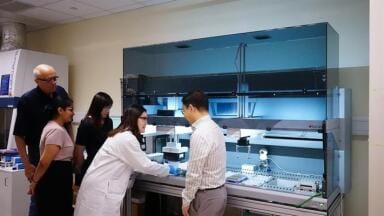
The collaboration involved the Massachusetts Institute of Technology (MIT), the Singapore-MIT Alliance for Research and Technology (SMART), Nanyang Technological University in Singapore, and institutions in the United States, Poland and France. Scientists from SMART’s Antimicrobial Resistance (AMR) interdisciplinary research group helped lead the work.
Antimicrobial resistance arises when bacteria and other pathogens cease to respond to medicines intended to control them. Bacteria can resist antibiotics through mechanisms such as drug expulsion, drug breakdown or changes to the cellular processes that antibiotics target. These responses depend partly on their capacity to control protein production.
Ribonucleic acid (RNA) performs several functions in the interpretation of genetic information. Within this system, tRNA molecules carry amino acids to the cellular machinery that assembles proteins and match them to the corresponding genetic instructions. Chemical modifications to tRNA can affect how accurately or efficiently this process operates.
In the study the researchers identified AvaS as the enzyme responsible for a modification called aminovaleramide cytidine (ava²C) in Pseudomonas aeruginosa. This bacterium can cause serious infections, including pneumonia and infections that lead to sepsis.
Although scientists had previously detected ava²C in bacteria and plants, the enzyme responsible for its formation had remained unknown.
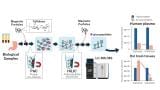
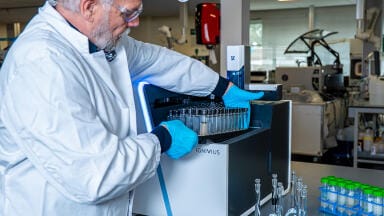
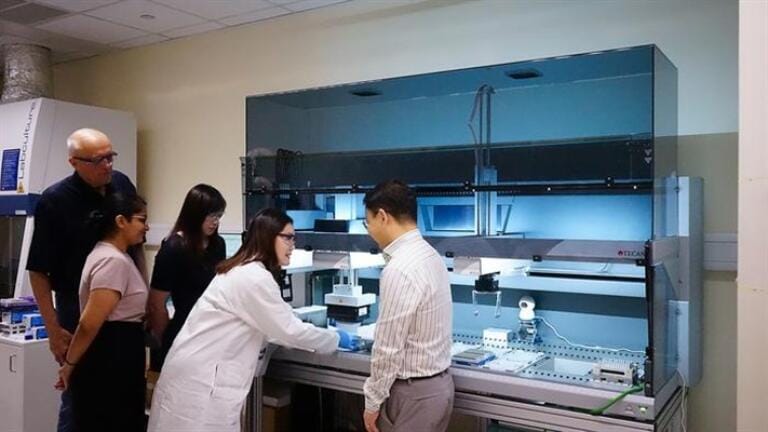
The researchers examined thousands of bacterial mutants with SMART AMR’s high-throughput RNA analysis platform, which combines liquid chromatography with tandem mass spectrometry. These techniques separate sample components and help identify their molecular characteristics.
The team found that AvaS used PLP to convert an existing tRNA modification, lysidine (k²C), into ava²C. The researchers also confirmed ava²C in the bacterium Acinetobacter baumannii and the plant Arabidopsis thaliana.
The effects on protein production were more nuanced than a general increase in speed. In experiments, tRNA that contained ava²C interpreted a particular genetic instruction less efficiently than tRNA that contained k²C. This suggested a possible regulatory role for the modification.
The study also linked ava²C levels to metabolic and cellular stress response pathways, although further research is required to establish its wider effects.
“While many RNA modifications have been known for decades, researchers are still uncovering the full extent of their roles,” said Professor Peter Dedon, co-lead principal investigator at SMART AMR, professor of biological engineering at MIT and a co-corresponding author.
“Our discovery has revealed, for the first time, that PLP-dependent enzymes can directly modify tRNA, expanding our knowledge and understanding of RNA-modifying chemistry,” said Dr Jingjing Sun, a SMART AMR research scientist and the paper’s first author and a co-corresponding author.
The team plans to investigate how ava²C influences bacterial metabolism and stress responses, and whether the modification can be disrupted or prevented. Its presence in plants also offers opportunities to explore its function beyond bacteria.
The discovery could help researchers assess potential antimicrobial targets, but its relevance to future treatments remains to be established.
For further reading please visit: 10.1038/s41589-026-02303-0

 Product directory