HPLC, UHPLC
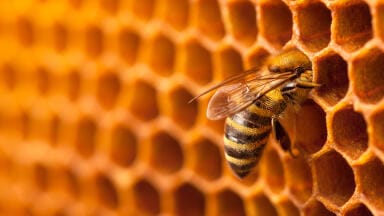
Melittin, the major bioactive peptide found in honeybee venom, is a small peptide consisting of 26 amino acids with a molecular weight of approximately 2.8 kDa. Its amphipathic structure enables it to interact with lipid membranes and disrupt their integrity, contributing to its biological activity. Melittin is known for its reported anti-inflammatory, antimicrobial, and anticancer properties, making it of interest for pharmaceutical research and potential therapeutic applications.
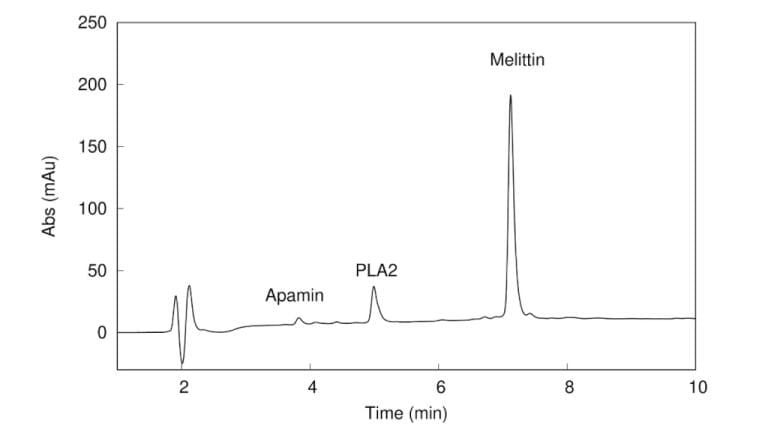
However, ensuring the purity of isolated melittin is essential, as crude bee venom contains numerous impurities, including allergenic components such as phospholipase A2 (PLA-2) and apamin. Reliable chromatographic analysis is therefore essential for assessing purity and monitoring purification processes.
This Application Note based on the publication of Tabesh et al. [1], demonstrates how the YMC-Triart Bio C18 column enables reliable purity assessment of melittin isolated from honeybee venom following purification using a greener solvent system.
Initial analysis of crude honeybee venom revealed a complex mixture, with melittin accounting for approximately 60% of the sample, alongside allergenic impurities such as phospholipase A2 (PLA-2) and apamin.
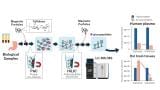
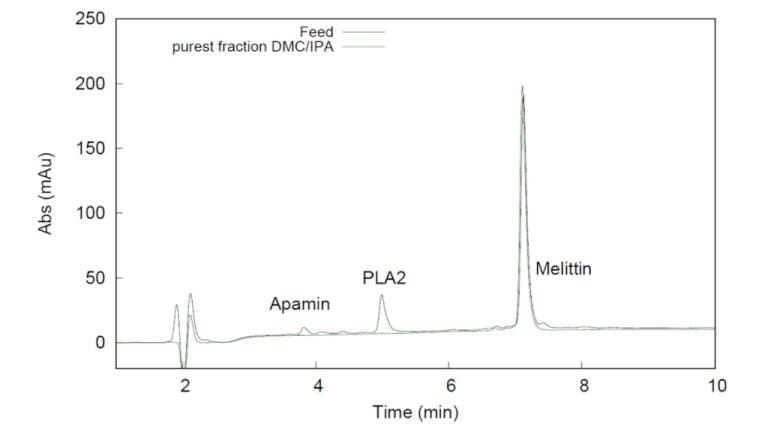
Following purification using a greener solvent system based on dimethyl carbonate (DMC) and isopropanol (IPA), the purity of the isolated melittin was assessed by RP-HPLC using a YMC-Triart Bio C18 wide-pore column.
Thanks to its excellent selectivity, the wide-pore column provided baseline separation of melittin from the remaining venom components. This enabled reliable purity assessment, confirmed the effective removal of major allergenic impurities, and demonstrated the suitability of YMC-Triart Bio C18 for monitoring peptide purification processes.
Read the full Application Note to explore the chromatographic conditions and results.
[1] Tabesh, A., De Luca, C., Faraji Shovey, A., Canton, R., Catani, M., Cavazzini, A., Rezadoost, H., Nosengo, C., & Felletti, S., Expanding the use of green solvents for the isolation of melittin from honeybee venom. J. Chromatogr. A, 2025, 1763, 466460


 Product directory