Bioanalytical
Published over 11 years ago. See the latest and most current information on Bioanalytical.
Pets play a role in many people’s lives, often forming a special bond. There are an estimated 17 million dogs and cats kept as pets in the UK — with 24% of households having a dog and 18% having a cat.
But as well as providing companionship — some pets are going a little further and helping to find therapies that could help to treat some of the diseases and illnesses that affect both pets and humans.
Billions of dollars are spent every year on searching for new drugs to help combat the many forms of cancer. But frequently the trials end in failure with the clinical approval rate for new treatments at 13%. Many of the new drugs fail in late stage clinical trials — it is in these stages that the drugs are tested on humans. Some of the failures could be attributed to the current method of animal testing in earlier trial stages.
Animal studies currently use specially bred mice or rats which have cancerous tumours or cells transplanted into them, typically onto their backs or other easy to monitor places. The method gives scientists good control over the experiments and allows changes to be seen quite quickly due to the short lifespans of the rodents compared to humans.
Unfortunately, this method cannot replicate what happens in a human where a complex soup of cancerous and healthy cells fight to gain the upper hand as tumours develop. Tumours don’t behave like the artificial cancers we give to a mouse — they may have spent many years gestating somewhere in a body before making themselves known.
This is where pets can come to our aid. Pets get illnesses, including cancers, similar to human illnesses. We shouldn’t be too surprised about this as animals share a substantial amount of genetic material with humans — with dogs being genetically closer to humans than mice are. Using naturally occurring cancers in dogs as models for human cancers is possible because of the shared genetics and environmental factors — as cancer in dogs is relatively common and progress’ quicker than in humans, this allows faster results from clinical trials.
A program was set-up in 2003 in the USA — Comparative Oncology Program — ‘to help researchers better understand the biology of cancer and to improve the assessment of novel treatments for humans by treating pet animals-primarily cats and dogs-with naturally occurring cancer’.
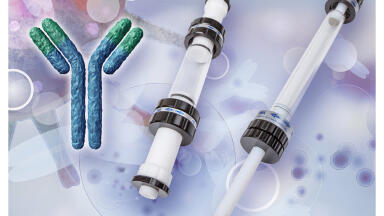
Once the proteins associated with the tumour cells have been found, researchers need to identify their make-up, which peptides combine and in which order. New chromatographic techniques are being used in designing new therapies to target cancers as discussed in the article, Strategies for the Characterisation of Biopharmaceuticals.
So next time you take the dog for a walk — think for a moment how man’s best friend is helping save lives.




 Product directory