
HPLC, UHPLC
Published over 15 years ago. See the latest and most current information on HPLC, UHPLC.
Introduction
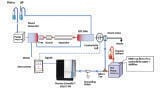
Water Condensation Nucleation (or Water Condensation Particle Counting) is a technology originally developed to detect aerosol particles in the application field of environmental monitoring. Using this technique air was drawn through an instrument and any particles counted to produce a global particle count for the environment.
By introducing a liquid stream rather than a gas flow the technology has been now been refined for use in Liquid Chromatography. Since Water Condensation Nucleation requires no knowledge of chemical structure to detect compounds it has found use in the area of universal detection. This article was written to demonstrate how the Water Condensation Nucleation technique has been developed into a LC detector with the ability to detect sub-nanogram levels that operates with a superior linear response over a wide dynamic range (3-4 orders of magnitude) and offers near universal detection for compounds that are less volatile than the mobile phase.
 Product directory













.jpg)