HPLC, UHPLC
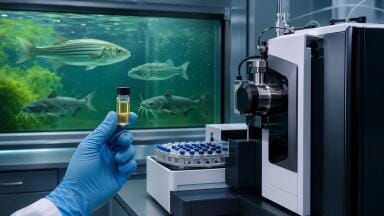
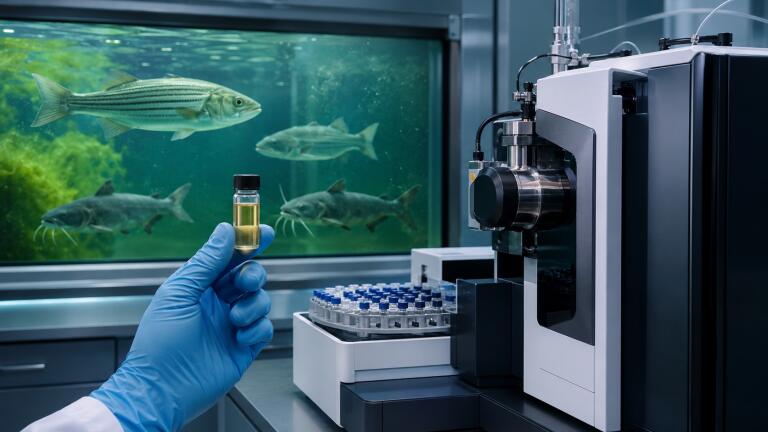
A UHPLC–MS/MS technique has detected 14 algal toxins in fish plasma, providing a rapid, economical and potentially non-lethal way to assess exposure of fish food stocks during potentially harmful algal blooms
Researchers have developed an ultra-high-performance liquid chromatography–tandem mass spectrometry method to detect 14 algal toxins in fish plasma, offering a potential non-lethal tool through which to monitor exposure during harmful algal blooms.
Algal blooms occur when algae or cyanobacteria proliferate and produce concentrations of cells or toxins that damage wildlife, ecosystems or human health. Nutrient pollution, aquaculture and warmer waters can increase the frequency, duration or geographical extent of some blooms.
Toxins produced during these events can accumulate within aquatic food webs. However, researchers lack sufficient information about the exposure of many larger fish species, partly because analytical methods must accommodate toxins with markedly different chemical properties.
A team at the Virginia Institute of Marine Science, Gloucester Point, Virginia, USA, initially developed the method for plasma from juvenile sandbar sharks. They compared three sample-clean-up procedures before analysis by ultra-high-performance liquid chromatography–tandem mass spectrometry.
The procedures included conventional solid-phase extraction, a hexane wash and a dispersive solid-phase extraction method based on the Quick, Easy, Cheap, Effective, Rugged and Safe approach, abbreviated to ‘QuEChERS’.
Dispersive solid-phase extraction places sorbent material directly into the sample extract. This promotes contact between the sorbent and interfering substances before centrifugation separates the cleaned solution for instrumental analysis.
The researchers assessed each method according to toxin recovery, processing time and cost. The QuEChERS dispersive solid-phase extraction procedure achieved the highest aggregate recovery – at approximately 101 per cent – while it also provided the fastest processing and the second-lowest cost of the three approaches.
The team transferred and adjusted the method for plasma from Atlantic striped bass and blue catfish. Across the three species, the procedure produced an average recovery of approximately 95 per cent for the target compounds.
The 14-analyte panel included toxins with different solubilities and chemical behaviours. To detect them within one workflow, the chromatographic system had to separate compounds from residual components of the plasma matrix before tandem mass spectrometry provided selective identification and quantification.
Plasma analysis could offer important advantages for ecological investigations because researchers can collect blood without necessarily killing the animal. Repeated sampling could consequently help scientists to follow changes in exposure over time or compare animals from affected and unaffected waters.
The method could also support investigations into unexplained fish deaths and establish baseline exposure data for species higher within aquatic food chains. Such evidence could improve assessments of the risks posed to fisheries, aquaculture and consumers of contaminated seafood.
The researchers noted that matrix composition differed between fish species, which meant that sample preparation required species-specific optimisation. This finding cautions against the assumption that an analytical procedure validated for one animal can transfer directly to another.
Further work must determine how toxin concentrations in plasma correspond to concentrations in edible tissues and whether the measurements reliably predict adverse effects. Broader validation will also be necessary before laboratories can adopt the method for routine regulatory surveillance.
The study demonstrates how practical sample preparation and ultra-high-performance liquid chromatography–tandem mass spectrometry can provide a comparatively rapid, economical approach to analyse chemically diverse phycotoxins in wildlife samples.
For further reading please visit: 10.1021/acsomega.6c02812

 Product directory