Bioanalytical
Published over 11 years ago. See the latest and most current information on Bioanalytical.
The University of Florence in Italy has played host to a new study which explores the volcanic activity of a location over the years by analysing fluoride levels trapped in ice and snow.
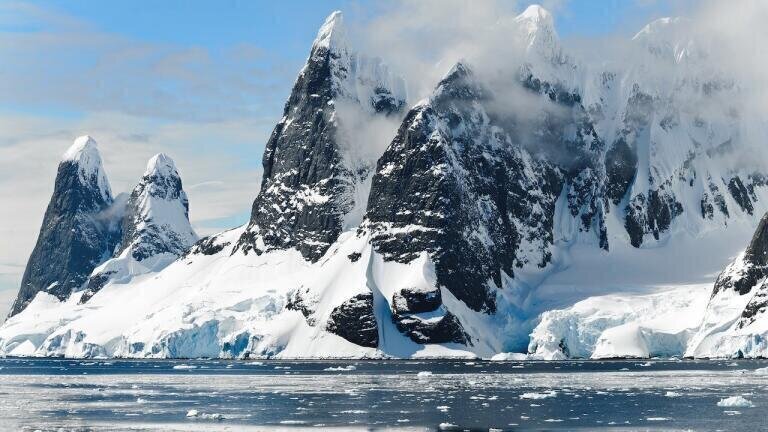
Because of their remoteness and extreme weather conditions, polar climates are among the least affected by human activity. This makes ice core samples from Antarctica some of the cleanest sources for investigation on Earth. As more ice is added over the years and layers form, dust, ash, sulphur and minerals can become trapped in it, thus providing a key to the history of the region in a similar way to counting the rings of a tree to determine its age.
Now, the Florence scientists have developed a method of analysing fluoride levels in Antarctic ice core samples to gauge its fluctuation over the course of history.
Ion chromatography has been an established technique for some years now. This article, from 2009, looks at how ion chromatography can be used to determine anion properties of materials such as cement. It has also been applied to ice core samples in the past in the form of fast ion chromatography (FIC) and used in conjunction with inductively coupled plasma-mass spectrometry (ICP-MS) and continuous flow analysis (CFA). However, these techniques were generally used to identify materials other than fluoride.
Due to issues with sulphur residue (namely, the requirement for decontamination and the uncertainty over the source of the sulphur), scientists have looked to hydrofluoric acid (HF) as an alternative to monitor volcanic activity. Research points to an eruption of Mount Erebus, as well as another “main event” involving a subglacial volcano in the west of the region.
The lead writer of the ground-breaking new paper, Mirko Severi, explained their process of thought to The Column: “Following the idea of the FIC method setup for the analysis of chloride, nitrate, and sulphate in the two EPICA [European Project for Ice Coring in Antarctica] ice cores, we decided to set up a similar method for the determination of fluoride.”
Using the new technique, the team were able to analyse 450 different ice core samples and produce results in under three minutes per sample. They incorporated heart-cut column switching in order to separate out analytes as the ice continuously melted, before using an analytical column to identify the fluoride itself.
As well as telling us a little bit more about the history of the Earth, this new information about volcanic activity could even shed some light on the future. At last year’s 11th Confocal Raman Imaging Symposium, Dr. Christian Weikusat delivered an illuminating talk on how ice core samples from Antarctica could lead us to learn more about climate changes and its effects. To learn more about Dr. Weikusat’s lecture and on the Symposium in general, see this interesting article on the event.
 Product directory