HPLC, UHPLC
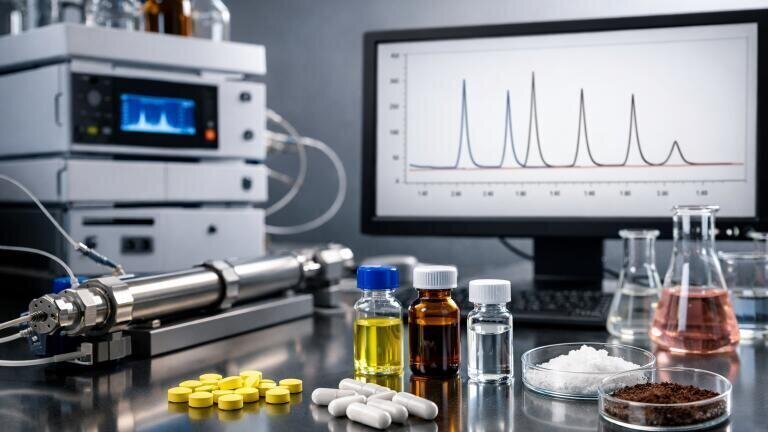
A rapid and efficient High-Performance Liquid Chromatography (HPLC) method was developed and optimized for the separation and quantification of solifenacin succinate (SOL), mirabegron (MIR), solifenacin impurities A (SOL IMP A), I (SOL IMP I) and mirabegron metabolite (MIR MET) using a C18 column. Solifenacin succinate is a muscarinic receptor antagonist used in the treatment of overactive bladder (OAB) by reducing bladder muscle contractions, while mirabegron, a β3-adrenergic agonist, works by relaxing the bladder smooth muscle to improve storage capacity and reduce symptoms of OAB. However, the presence of impurities and metabolites, such as solifenacin impurities A, I, and E, can negatively impact the safety and efficacy of these drugs, potentially causing adverse effects such as increased toxicity, altered pharmacodynamics, or diminished therapeutic effectiveness. The method employed an isocratic elution system with a mobile phase of water containing 0.1% formic acid (solvent A) and acetonitrile with 0.1% formic acid (solvent B), using a C18 column (4.6 mm × 100 mm, 3 μm) at a flow rate of 1.2 mL/min and a column temperature of 30 °C. UV detection at 220 nm allowed for the efficient separation of all analytes within 10.5 min, with excellent resolution between solifenacin succinate, mirabegron, their metabolites, and impurities. The linearity range for solifenacin succinate and mirabegron was 1–100 µg/mL, and solifenacin impurities A, I, and E, and mirabegron metabolite exhibited linearity ranges of 0.1–10 and 0.1–50 µg/mL, respectively. Validation studies confirmed good precision (RSD < 2%) and accuracy, making this method suitable for routine quality control and pharmacokinetic studies. This validated HPLC method offers a reliable tool for monitoring the purity of solifenacin succinate and mirabegron, ensuring their therapeutic efficacy and safety by quantifying both the active compounds and potentially harmful impurities or metabolites.
To read the complete article click here

 Product directory









.jpg)
.jpg)