HPLC, UHPLC
Ultra-high-performance liquid chromatography–tandem mass spectrometry has shown that most medicines stored aboard the International Space Station retained similar potency to Earth-based controls, although epinephrine showed greater degradation
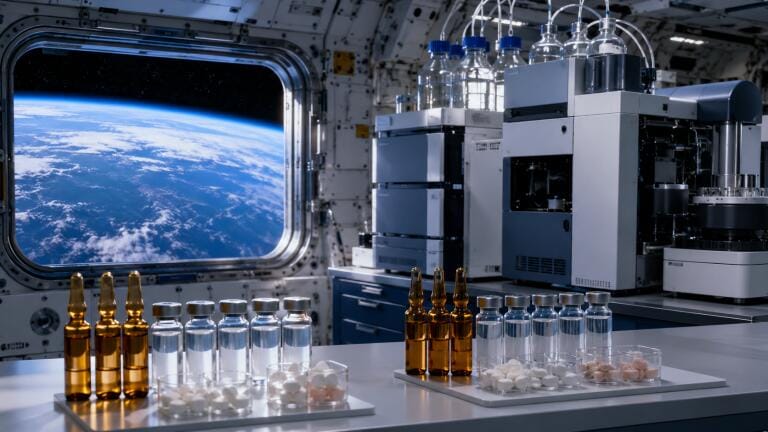
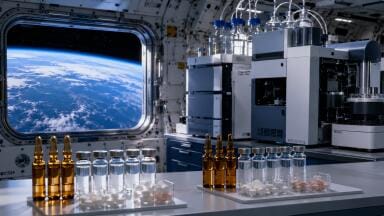
Most medicines examined after storage aboard the International Space Station retained similar potency to lot-matched samples kept on Earth, according to an ultra-high-performance liquid chromatography–tandem mass spectrometry (UHPLC–MS/MS) study.
The findings could inform plans to provide reliable pharmaceutical supplies during future missions in which astronauts travel beyond low-Earth orbit and cannot obtain replacement medicines regularly.
Medicines aboard the International Space Station experience environmental conditions that differ from those in terrestrial pharmacies. These include microgravity, raised carbon dioxide concentrations and chronic exposure to solar radiation.
Earlier studies have raised concern that such conditions could accelerate the degradation of active pharmaceutical ingredients. Loss of potency could have serious consequences during extended lunar missions – or on the journey to Mars – where crews would have limited medical support and resupply would be impracticable.
Researchers led by Dr. Craig Nowadly of the Brooke Army Medical Center, Fort Sam Houston, Texas, USA, examined a convenience sample of medicines returned from the station and compared them with control products from the same manufacturing lots that had remained on Earth.
The products included caffeine, diazepam, diphenhydramine, epinephrine, ketamine, lidocaine, naloxone and promethazine in both solid and liquid formulations. It should be noted that at the time of analysis, all samples had passed their labelled expiry dates because prolonged storage and delays had preceded laboratory testing.
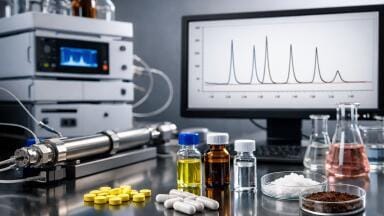
The researchers used UHPLC–MS/MS to separate and quantify each active pharmaceutical ingredient. The use of lot-matched controls helped the team to distinguish possible spaceflight effects from differences in manufacture or initial formulation.
Many samples in both the spaceflight and terrestrial groups fell outside a strict acceptance interval of 95 to 105 per cent of labelled potency. More than 90 per cent remained within a broader interval of 80 to 120 per cent, however.
Differences between the space-exposed and Earth-stored samples were generally within approximately five per cent. This suggested that storage aboard the station had not produced a large independent effect on most of the medicines examined.
Epinephrine provided the clearest exception. Space-exposed samples showed potency approximately 10 per cent below that of their corresponding terrestrial controls which suggested that the medicine or its formulation might be particularly susceptible to the space environment or that it degrades faster once beyond its use-by-date.
The authors described the degradation overall as limited. Nevertheless, the results do not establish that medicines can safely remain in use beyond their labelled expiry dates. Both the flight and control products had aged and the sample represented only a small selection of formulations.
The study also could not isolate for the effects of radiation, microgravity, temperature variation and other environmental factors. Medicines stored during deeper-space missions would experience radiation conditions different from those aboard the comparatively protected International Space Station.
Future work will need to examine more products, formulations and packaging systems under controlled conditions. Researchers may also need to develop stabilised formulations or protective containers for medicines that show particular vulnerability.
The study demonstrates how UHPLC–MS/MS can provide the quantitative evidence required to design spaceflight formularies, determine realistic shelf lives and identify medicines that require additional protection during long-duration exploration.
For further reading please visit: 10.1177/10806032261466966

 Product directory











.jpg)
.jpg)