HPLC, UHPLC
Published over 11 years ago. See the latest and most current information on HPLC, UHPLC.
In today’s alarmingly-militarised world, using poison as a weapon has taken on a global significance. Anthrax bombs, mustard gas and other forms of chemical warfare are just the latest uses of poison to kill and maim. However, the history of its use may well stretch back much further than we are aware.
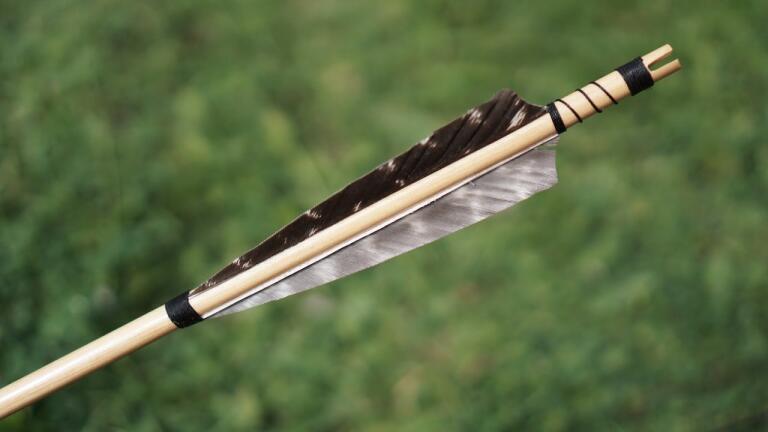
A new study from Dr Valentina Borgia, who is a specialist of Palaeolithic weaponry, is hoping to definitively prove that poisoned arrows and other instruments of death were used as far back as 30,000 years ago. Teaming up with forensic scientist Michelle Carlin of Northumbria University, the pair used the technique of liquid chromatography combined with mass spectrometry (LC-MS) to analyse weapons from yesteryear for traces of poison.
We have known for a long time that poison was not a new invention. That its use stretched back to the Romans and the Greeks is common knowledge – indeed, the word “toxic” is actually derived from the Greek word for “bow”, toxon. The reason for this is that a genus of the yew tree named Taxus was simultaneously used to create bows and also to poison the tips of arrows with its seeds.
Also, throughout history, poison has reared its ugly head. Cleopatra is thought to have either committed suicide or been murdered by a venomous asp bite; Socrates escaped execution by taking his own life with hemlock; Alexander the Great has recently been touted to have died from poison, as well.
However, the evidence for such instances comes mainly from lore, literature and ancient writings. Cold, hard scientific fact has often been lacking. Borgia, Carlin and their team are looking to change all that.
By analysing the blackened residue of 6,000-year-old arrowheads from Ancient Egypt, Borgia and Carlin demonstrated the presence of poison. Chromatography was used to isolate the various compounds, and the poison’s enduring prowess was tested on a poor hapless cat – who survived the episode, albeit in a state of paralysis.
The team are keen to press on and delve further into the history of poison using the new technique, and they are hopeful on producing evidence of toxic use as far back as 30,000 years. “Now we have this technique available, and have shown that it works, we need to test it as much as possible on archaeological samples,” remarked Borgia.
Chromatography is something of an old hand at revealing aspects of human life from millennia ago. On a lighter note, alcohol archaeologist Patrick McGovern has been attempting to recreate drinks from the past. Recently, he worked in tandem with the Dogfish Head Brewery to bring back a 3,500-year-old Danish ale named Kvasir. As well as recreating a 9,000-year-old Chinese beverage named Chateau Jihau, he has expressed an intention to revive a 16,000-year-old Egyptian aperitif, which, if successful, would be the oldest drink by some distance.
Such work adds a whole new meaning to the question: “What’s your poison?”




 Product directory