Chiral
Published over 5 years ago. See the latest and most current information on Chiral.
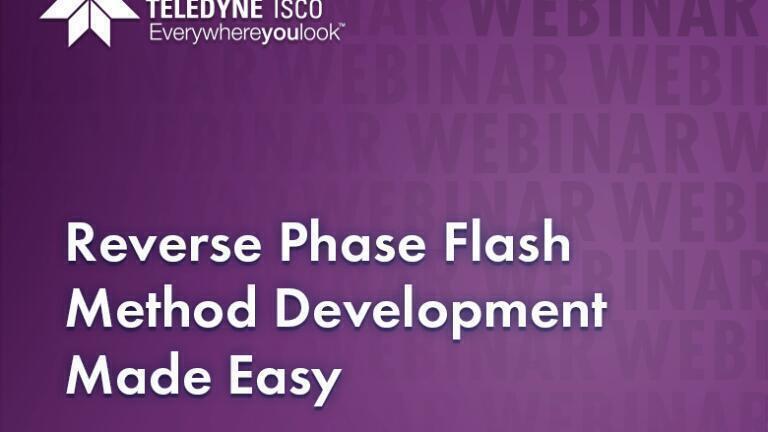
Join Teledyne ISCO on July 21 for a webinar that will discuss Reverse Phase Flash Method Development
Reverse phase flash chromatography is more challenging than normal phase. Although reverse phase flash methods can be created from thin layer chromatography, the TLC plates may take a very long time to run, especially when using highly-aqueous mobile phases. In this webinar, Jack Silver, Applications Chemist, will explain how to avoid this problem by using analytical HPLC systems instead to create reverse-phase flash chromatography methods.
From this 45-minute presentation plus interactive Q&A session, attendees will understand the most important issues impacting reverse-phase flash method development and how to resolve them quickly and effectively using the latest tools and best practices.
Title: Reverse Phase Flash Method Development Made Easy
Date: July 21, 2021
Time(s): 7:00 a.m. CDT; 1:00 p.m. CDT, 8:00 p.m. CDT
Speaker: Jack Silver, Applications Chemist, Teledyne ISCO
To register:
7AM Click here
1PM Click here
8PM Click here

 Product directory