HPLC, UHPLC
Published over 14 years ago. See the latest and most current information on HPLC, UHPLC.
A seminal paper was written by Manz et al.
(1) identifying the use of possibilities of using ‘chip based technology’ within an analytical instrument. When did you as a scientist first think that ‘chip technology’ could be a useful addition to analytical instrument design and separation science
in particular?
In the early 1990’s we saw a lot of enthusiasm for the “Lab-on-a-Chip” concept. And at the time, the concept of integrating multiple laboratory processes like sample prep, cell lysing, digestion, separation and detection onto a single microfluidic device looked technically possible.
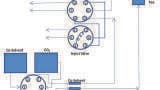
However, as researchers began to develop these microfluidic systems, integrating these various functions onto a single device proved difficult. Each lab process used different technologies, such as sample prep or digestion, compared to technology used for separation and detection. What started out as a single device became a hybridisation of a variety of technologies with a host of complex interfaces.

 Product directory