Bioanalytical
Published over 12 years ago. See the latest and most current information on Bioanalytical.
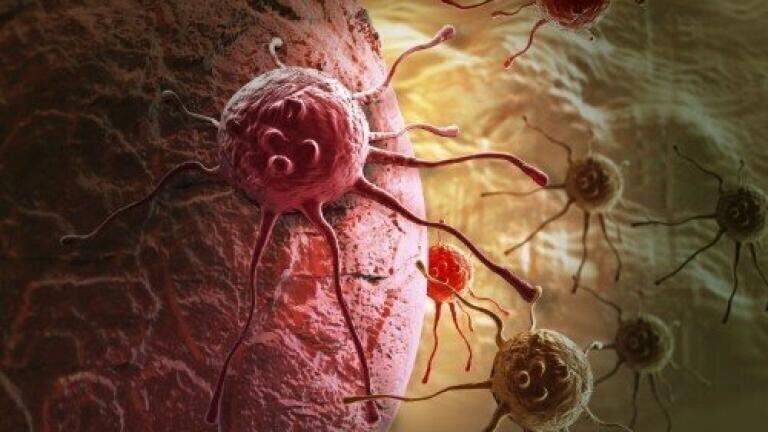
A team of researchers have shown that blocking an enzyme in the body can slow the growth of pancreatic cancer.
The scientists from Imperial College London blocked the function of the Hhat enzyme, which slowed the spreading of cancer in the pancreas. The method works by preventing a protein named Hedgehog, which stimulates normal cells, and stops it from encouraging the growth of the disease.
It studied the role of Hedgehog, which is crucial in allowing cells in embryos to divide and grow into the correct body parts. Although this is often stalled when an embryo is formed, in many cases where cancer is present - including pancreatic cancer - it is somehow reactivated.
Hedgehog cannot function without the Hhat enzyme, which allows it to stick to other cells, enabling the sending of messages between cells. However, in cancer Hedgehog influences healthy cells through a ‘signalling pathway’, which instructs them to secrete nutrients to feed the cancer cells. This creates an ideal environment for the cancer cells to grow and spread throughout the body.
Lead researcher Professor Tony Magee, from Imperial’s National Heart and Lung Institute, said that signalling pathways are complex.
"They’re like a flow diagram, with a multitude of arrows travelling along and splitting off at many points along the way, each initiating a new chain reaction of activity. Whilst you could potentially stop the Hedgehog signal at many points along its journey, we wanted to see if we could simply prevent the process from starting in the first place."
The research, which was funded by the Pancreatic Cancer Research Fund, was published in the latest issue of PLOS ONE and could lead to a new drug being developed to help cancer patients.
Genetic techniques were used by the team of researchers to stop the function of Hhat in pancreatic cancer cells, which caused them to grow at a substantially slower rate. However, the method used can not be transferred to animal models or humans.
To help cancer patients, the team would need to find chemical compounds which could be developed into a new drug to replicate this effect.
 Product directory