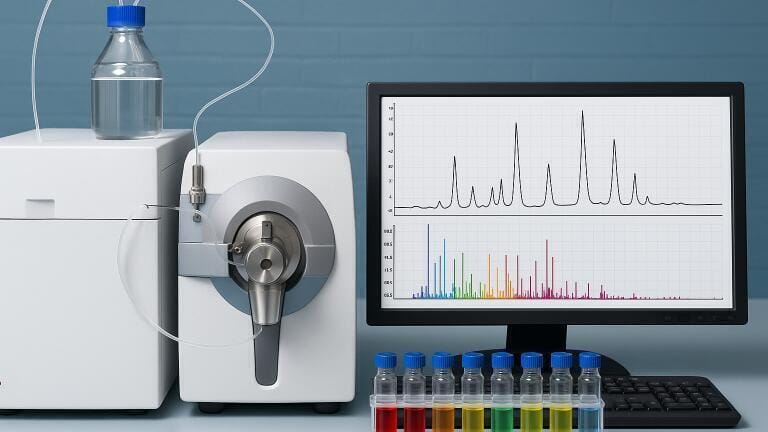
Ion chromatography (IC)
A British-based research team has reported a detailed protocol for the use of anion-exchange chromatography mass spectrometry (AEC–MS) in metabolomics, expanding the scope of applications for this analytical technology. The method, which couples ion-exchange chromatography and mass spectrometry via electrolytic ion suppression, allows for the highly selective analysis of polar and ionic compounds and has proved valuable in environmental chemistry, food chemistry, forensics, and cell biology.
The protocol is titled: ‘Metabolomics using anion-exchange chromatography mass spectrometry for the analysis of cells, tissues and biofluids’, and provides a step-by-step instructions for untargeted and semi-targeted metabolite analysis from cell, tissue, and biofluid samples. The authors reported that it requires minimal sample preparation and offers robust, sensitive and selective outcomes.
They demonstrated that the approach enabled comprehensive coverage of hundreds of metabolites across key pathways, including glycolysis, the pentose phosphate pathway, the tricarboxylic acid cycle, purine and pyrimidine metabolism, amino acid degradation, and redox metabolism.
“Developing a novel metabolomics protocol is very exciting, it expands capability for existing applications but also enables us to explore and develop novel applications.
“We are now applying the protocol in several research areas including investigating gut microbiome metabolism, how antimicrobial resistance impacts bacterial metabolism and in the discovery of biomarkers for the early detection of cancer,” said Dr. James McCullagh, professor of biological chemistry and director of the Mass Spectrometry Research Facility at the University of Oxford, United Kingdom.
Ion-exchange chromatography has been in use since the 1970s, but it has historically proved difficult to couple directly to mass spectrometry. The present method uses electrolytic ion suppression to link high-performance ion-exchange chromatography with mass spectrometry, an innovation that has improved molecular specificity and selectivity.
“Ion-exchange chromatography offers a retention and elution mechanism which is novel to metabolomics and is proving to be a powerful solution for long-standing challenges,” said Rachel Williams, a doctoral candidate with the McCullagh Research Group, part of Oxford University.
The method employs an inline electrolytic ion suppressor to neutralise hydroxide ions in the eluent stream following chromatographic separation, which allows direct coupling of AEC with MS. Counter ions are also removed, producing a neutral aqueous eluent with a simplified matrix that is optimal for negative ion analysis.
The AEC–MS protocol has already been applied in several studies. In collaboration with the Kennedy Institute, Oxford, it was used to investigate how the gut microbiome uses energy substrates, leading to the discovery that the microbiome-derived metabolite butyrate enters the circulation and enhances host immune response.
More recently, it has been used to study metabolism in diabetic pancreatic β-cells, where it revealed that increased glucose levels inhibited the activity of glyceraldehyde-3-phosphate dehydrogenase (GAPDH) and pyruvate dehydrogenase (PDH). This inhibition caused the accumulation of upstream intermediates, altered gene expression, impaired insulin secretion, and excessive glycogen storage.
For further reading please visit: 10.1038/s41596-025-01222-z


 Product directory



















.jpg)