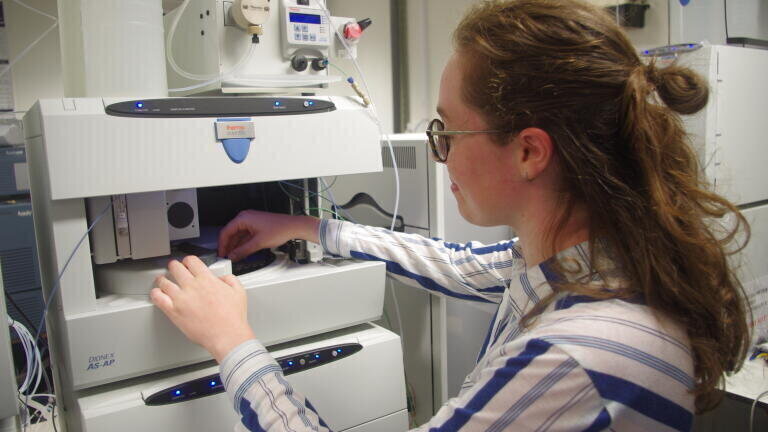
Ion chromatography (IC)
Researchers at the University of Oxford’s Department of Chemistry have developed a novel anion-exchange chromatography–mass spectrometry method that greatly enhances the analysis of polar and ionic metabolites
A McCullagh Group research team at the University of Oxford’s Department of Chemistry has revealed a novel method that enables comprehensive analysis of metabolites in cells, tissues and biofluids.
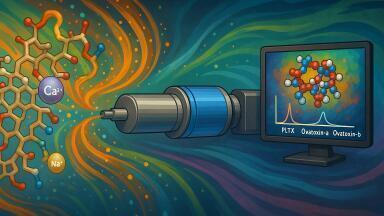
The newly introduced protocol delivers a step-change in capability for analysing highly polar and ionic metabolites. The innovation derives from the use of anion-exchange chromatography coupled to mass spectrometry (AEC-MS) to answer a long-standing need to improve large-scale analysis of such metabolites, which drive primary metabolic pathways and processes in cells.
Despite being in use since the 1970s, ion-exchange chromatography has previously been difficult to couple directly to mass spectrometry – unlike other chromatographic techniques. The novel method uses electrolytic ion-suppression to link a high-performance ion-exchange chromatography system directly with mass spectrometry, thereby improving molecular specificity and selectivity. This approach has already led to novel applications that were recently reviewed by the McCullagh Group.
“Ion-exchange chromatography offers a retention and elution mechanism which is novel to metabolomics and is proving to be a powerful solution for long-standing analytical challenges in the field,” commented Rachel Williams, a doctoral candidate in the McCullagh Group, whose work focuses on the development of ion-exchange chromatography–mass spectrometry.
Metabolomics is one of a group of ‘omics’ technologies, which include genomics and proteomics, and provides a powerful combinatorial approach to analyse molecular systems in cells, tissues and whole organisms. Changes in metabolite levels act as sensitive biomarkers for specific diseases, diets, nutritional states, treatments and chemical exposures. The technology offers a tool for discovering these molecular changes and can be applied across disciplines including biological chemistry, molecular biology, molecular medicine, pharmacology and environmental science.
The AEC-MS protocol has already been applied in several research studies. In one collaboration with the Kennedy Institute of Rheumatology (Oxford) the method was used to investigate how the gut microbiome utilises energy substrates. That study discovered that the microbiome-derived energy substrate butyrate circulates in the host and can help bolster the host immune response.
In another study the method was used to examine metabolism in diabetic pancreatic β-cells. The researchers found enzyme activity of glyceraldehyde-3-phosphate dehydrogenase (GAPDH) and pyruvate dehydrogenase (PDH) was inhibited when glucose levels increased, resulting in the accumulation of upstream intermediates and causing changes in gene expression, impaired insulin secretion and glycogen build-up.
“Developing a novel metabolomics protocol is very exciting; it expands capability for existing applications but also enables us to explore and develop new applications.
“In our lab we are now applying the protocol in several research areas including investigating gut microbiome metabolism, how antimicrobial resistance impacts bacterial metabolism and in the discovery of biomarkers for the early detection of cancer,” said Professor James McCullagh, at the Department of Chemistry, University of Oxford, who led the project.
Oxford is world-famous for research and teaching excellence and is home to some of the most talented people from around the world. Their work helps the lives of millions by solving real-world problems through a vast network of partnerships and collaborations. The breadth and interdisciplinary nature of the research alongside a personalised approach to teaching sparks imaginative and inventive insights and solutions.
For further reading please visit: 10.1038/s41596-025-01222-z



 Product directory