.jpg)
Ion chromatography (IC)
Published over 9 years ago. See the latest and most current information on Ion chromatography (IC).
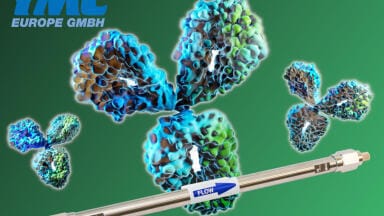
Chromatography companies are always on the look-out for new technologies, ideas or materials that can take the science of separation forward. Separation scientists are searching for the fastest way to get the sharpest resolution without losing any of the information contained in sample. The advances in the analysis of large biological molecules are discussed in the article, Faster Analysis of Monoclonal Antibodies Using Silica Monoliths Designed for Bioanalysis.
But the real potential game-changer in new materials is graphene. The wonder material first produced and characterized by two physicists in Manchester carries significant hope on its shoulders. Its properties make it an exciting material that could be used in numerous applications to make life easier. But can the wonder material play a role in better separations?
Carbon is one of the most interesting elements in the periodic table. After all, it is carbon based lifeforms that have inhabited the Earth. But it is perhaps the way that carbon can exist in several different forms that make it so interesting. Without carbon, children cannot write, girlfriends cannot get engaged and buckyballs wouldn’t exist.
But in 2010, the Royal Swedish Academy of Sciences recognised the importance of another form of carbon and awarded Geim and Novoselov the Nobel Prize in Physics for their work in the production and isolation of graphene.
Graphene is a two-dimensional crystalline material. It is formed from a single layer of carbon in sheet — which famously was produced by using tape to pull a layer from a block of graphite — simple when you know what you’re looking for. But it is graphene’s remarkable mechanical and electrical properties that make it stand out. It is stronger than steel and very stretchable, with high thermal and electrical conductivity, and due to its single atomic layer has a huge surface area.
And now a team of Chinese chemists have reported on how they have used graphene as a stationary phase in ion-exchange chromatography. Graphene can’t be used as a stationary phase on its own — it needs to be combined with a support and get a little help with binding mobile molecules. The Chinese chemists have managed to do this as described in the journal Analytica Chimica Acta.
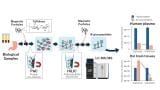
The chemists used a support material made from a polymer of polystyrene-divinylbenzene which they covered in graphene oxide. They then reduced the graphene oxide removing the oxygen groups to leave graphene on the polymer support. The negatively charged graphene was then covered in another polymer — polyethyleneimine (PEI). The team then built hyper-branched condensation polymers (HBCP) on top of the PEI making an anion exchange surface.
The team demonstrated that by building different thicknesses of graphene and HBCP they could tune the columns to different capacities. The columns had good performance with different anions, amino acids and organic acids with good reproducibility and column stability.
All from a pencil and a piece of tape.




 Product directory