Columns (GC)
Published over 4 years ago. See the latest and most current information on Columns (GC).
It will come as no surprise that water is the most consumed beverage globally. But did you know that tea is second? The leaf-infused drink is a staple in the morning, afternoon and evening in countries worldwide. However, recent findings suggest that there may be issues with disinfection by-products (DPBs) in your beloved cuppa.
Disinfection is a common practice to make sure drinking water is safe for consumption. However, in doing so, DPBs can develop. These by-products of disinfection occur when disinfectants like chlorine react with compounds that are naturally present in water.
Some DBPs have already been linked with an increased risk of cancer and birth defects. However, there is a vast array of factors involved in the formation of DPBs, including the disinfectants used, their dose, and of course the various compounds present in the water which could react with them. As a result, research into their formation is highly complex.
In theory, the introduction of tea and the brewing process could add more variables to the formation of DPBs. To investigate this, scientists from the University of South Carolina measured the levels of 60 known DPBs in three types of tea – Twinings green tea, Early Grey and Lipton – as well as the tap water used to make it.
Interestingly, they found that DPB levels were lower in tea than the tap water. It’s thought that this is down to evaporation during the boiling process or absorption by tea leaves during brewing. However, the 60 DPBs being monitored only accounting for 4% of the total organic halogen in tea.
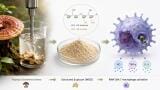
In other words, there were a lot more uncharacterized compounds that had been formed – accounting for 96% of the total. Researchers suspected that many of these were down to the reaction of a disinfectant (chlorine) with polyphenols from the tea leaves.
Using gas chromatography–high-resolution mass spectrometry, the researchers identified 15 additional haloaromatic DBPs in the teas. This supports their assumption that the unknown DBPs were a result of disinfectants reacting with the tea itself.
Similar methods of gas chromatography have been used to provide molecular weight and elemental composition information in the analysis of crude oil, as explored in the article ‘GCxGC with Soft Ionisation and High-Resolution Mass Spectrometry Applied to Petroleum Biomarker Analysis’.
Given the potential risks of DBP exposure mentioned above, their findings may be concerning for avid tea drinkers. However, using general DBP limits put forward by the US Environmental Protection Agency, researchers calculated that you would have to drink 18+ cups of tea every day to be at risk. That said, given that ‘safe’ levels have not been found for many specific DBPs, further research is required on the identity and formation of aromatic DBPs in tea.


 Product directory