Gas chromatography
Published over 9 years ago. See the latest and most current information on Gas chromatography.
The most common technique used for the analysis of Organochlorine pesticides (OCPs) and polychlorinated biphenyls (PCBs) at trace level is gas chromatography coupled to an electron capture detector (GC-ECD). ECD detection grants excellent sensitivity and good selectivity. However, for very complex matrices interference can become an issue. In recent years, the use of GC coupled to tandem mass spectrometry (GC-MS/MS) has been investigated. The main limitation of these approaches is their applicability exclusively for targets.
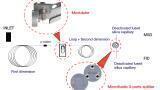
Comprehensive two-dimensional gas chromatography (GCxGC) benefits from the coupling of two different separation mechanism in a single analysis. This provides enhanced resolution and peak capacity, leading to superior separation power and much less chance for co-elution.
In a preliminary study JSB investigated the performance of GCxGC with thermal modulation coupled to a QTOF detector for quantification of OCPs and PCBs at low concentrations. The QTOF allows for acquisition in Election Ionisation (EI) and Chemical Ionisation (positive and negative modes available).
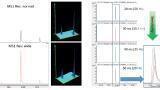
JSB concluded that GCxGC with thermal modulation provides higher resolution power than standard GC and allows for easier, detailed separation of complex OCPs and PCBs mixtures. Thanks to the higher peak capacity, co-elution is much less likely even with very dirty matrices. When coupled to MS in scan mode simultaneous identity confirmation for targets and identification of unknowns was allowed. This is not possible with ECD or a triple quadrupole (MS/MS).
The QTOF’s high resolution and mass accuracy provided additional
identification confidence, selectivity and sensitivity. Results obtained for linearity and repeatability show that GCxGC with thermal modulation and QTOF are robust and provide performance suitable for reliable identification and quantification. NCI mode provided good sensitivity for chlorinated compounds such as OCPs and PCBs. The option to switch from EI to CI mode, in combination with the MS/MS capability, granted wide operational flexibility.
 Product directory