Gas chromatography
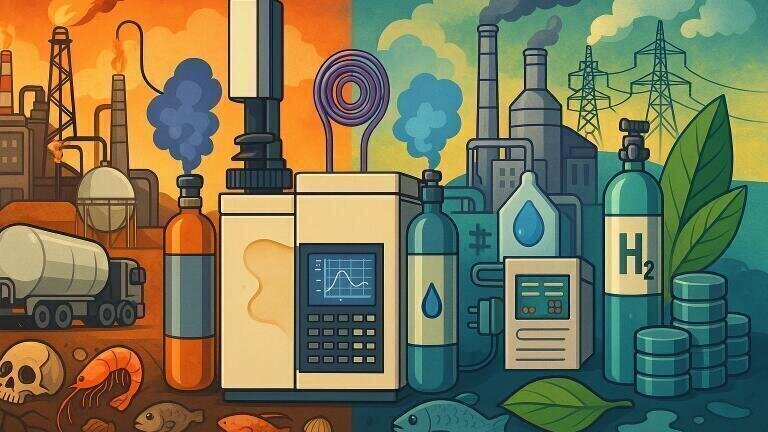
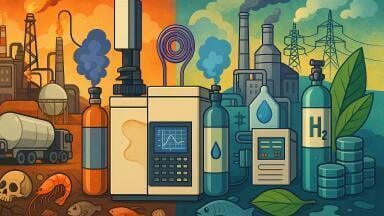
An attributional life cycle assessment was applied to compare helium and hydrogen as carrier gases for routine gas chromatography. A single functional unit of one chromatographic analysis was used. A ten-year operational period was examined as a utilisation scenario in sensitivity
analysis. Three supply routes were modelled: helium obtained as a by-product of natural gas extraction and liquefaction; merchant hydrogen from steam-methane reforming; and on-site hydrogen generation by proton-exchange-membrane electrolysis. System boundaries covered raw
material extraction through waste management of laboratory consumables. Capital goods were excluded except for the electrolyser unit.
Normalised impact assessment identified marine and freshwater ecotoxicity, human toxicity, climate change, and fossil resource scarcity as dominant categories. On a per-analysis basis, hydrogen performed better than helium in all environmental impact categories due to shorter
analysis times and reduced electricity demand, although electrolytic hydrogen showed elevated ecotoxicity from trace-metal emissions in power generation. In the ten-year utilisation scenario, higher chromatographic throughput with hydrogen increased cumulative use of energy and
consumables, producing greater total burdens in several midpoint indicators despite superior per-run performance. Uncertainty and sensitivity analyses confirmed the robustness of these results and highlighted electricity sourcing as a critical drive.
To read the complete article click here:

 Product directory




















.jpg)