
Gas chromatography
A team of researchers at the Hefei Institutes of Physical Science has identified volatile organic compounds as potential biomarkers for pan-cancer detection. The study has shown that distinct volatile organic compounds profiles in urine, faeces and odour samples can reveal early-stage tumour development across multiple organs
Researchers led by Professor Chu Yannan at the Hefei Institutes of Physical Science, Chinese Academy of Sciences, Shushan Lake, Anhui Province, China, have identified a novel method to detect cancer at an early stage by analysing the body’s invisible chemical ‘scents’. The study has shown that volatile organic compounds (VOCs) could serve as reliable biomarkers for multi-cancer, or pan-cancer, screening.
Early diagnosis remains one of the greatest challenges in oncology. While early detection can dramatically improve survival rates, most diagnostic methods still target single cancer types and often rely on invasive procedures such as biopsies or endoscopies. Pan-cancer screening, by contrast, aims to identify tumours across several organs simultaneously, offering a potentially simpler and more effective route to early intervention.
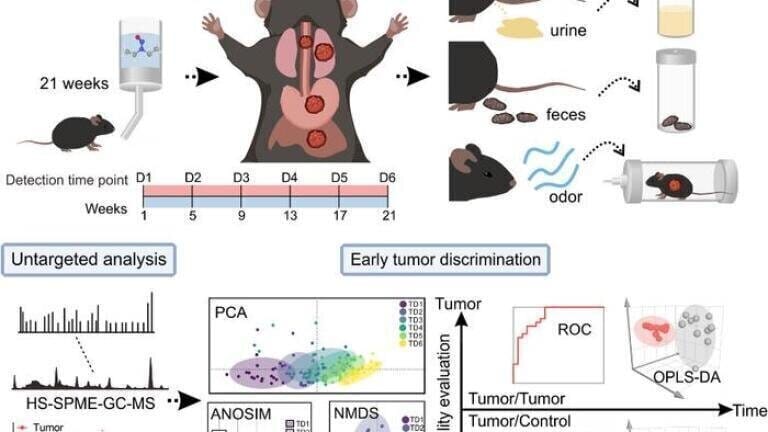
In the reported study, the researchers established a pan-cancer mouse model by chemically inducing tumours in multiple organs, including the lungs, stomach, liver and oesophagus. During a 21-week tumour development period, they collected urine, faeces, and odour samples from both tumour-bearing and healthy mice at six time points.
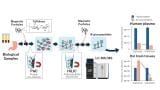
Using headspace solid-phase microextraction gas chromatography-mass spectrometry (HS-SPME-GC-MS), they carried out non-targeted detection and analysis of VOCs emitted from these samples.
The analysis identified three groups of tumour-associated VOCs that reflected key metabolic changes during cancer progression. These volatile markers not only distinguished tumour-bearing mice from healthy controls but also revealed that cancer-related changes appeared well before advanced tumour formation. Specifically, early tumour signals were detectable in urine by the fifth week, in odour by the thirteenth week, and in faeces by the seventeenth week of the study.
“This study has provided an important experimental foundation to explore volatile organic compound biomarkers for pan-cancer detection,” said Professor Chu. The findings suggest that VOC analysis could support the development of non-invasive diagnostic tools capable of detecting multiple cancers at once through simple biological samples.
By focusing on the body’s unique chemical emissions, this approach may eventually complement or replace conventional single-cancer screening, paving the way for more comprehensive early-detection strategies in clinical practice.
For further reading please visit: 10.1021/acs.jproteome.5c00255

 Product directory


















.jpg)
.jpg)