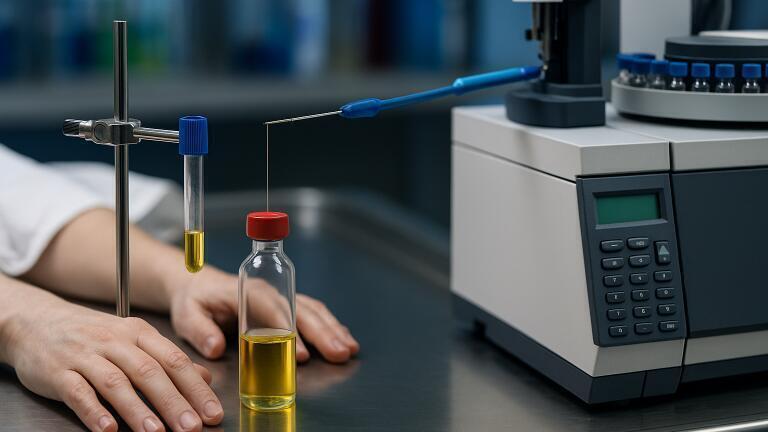
GC-MS
Researchers at India’s Kasturba Medical College have secured a patent for a volatile organic compound profiling method that uses gas chromatography–mass spectrometry to provide more accurate estimates of the postmortem interval with potential to strengthen criminal investigations and reduce wrongful convictions
Indian forensic scientists have reported a novel analytical method that promises more accurate estimation of the time of death, a key requirement for forensic investigations. The approach, developed at Kasturba Medical College (KMC), Mangaluru, Karnataka, India, uses chemical signatures from decomposing tissue to provide a more objective measure of the postmortem interval.
The method has been patented with the Indian Patent Office which has recently published the patent: “A Method for Profiling Postmortem Volatile Organic Compounds by Headspace Solid-Phase Microextraction”. The grant marks formal recognition of a novel forensic tool that has potential to improve the precision, accelerate investigations, and reduce the risk of investigative error and wrongful convictions.
Conventional practice in estimation of the postmortem interval (PMI) often relies on a combination of physical and biological indicators such as body temperature, rigor mortis, postmortem lividity and insect colonisation. These indicators can provide useful guidance, but they are vulnerable to environmental influences, particularly in hot and humid climates.
Variables such as ambient temperature, access of insects, burial conditions, and prior illness can introduce confounding factors and therefore substantial uncertainty, especially once more than a few hours have passed since death. A solvent-free, field-deployable chemical method that can quantify decomposition products in a systematic manner therefore represents a significant methodological advance.
The work originated in the department of forensic medicine and toxicology at KMC, Mangaluru, led by Riya Render and Dr. B. Suresh Kumar Shetty and the team adopted an explicitly interdisciplinary structure. It included Dr Chiranjit Ghosh from the Manipal Institute of Technology, who contributed engineering and analytical expertise; Dr Sevitha Bhat from the microbiology department at KMC, who advised on decomposition processes and microbial activity; Mayur Sudhir Balbudhe, a doctoral candidate in forensic medicine and toxicology; and Dr B Unnikrishnan, dean of community medicine at KMC, Mangaluru, who provided a population and public-health perspective. KMC forms part of Manipal Academy of Higher Education (MAHE).
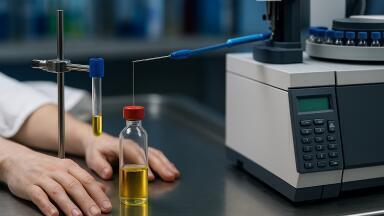
The KMC team has emphasised that their approach has been designed to operate under real-world conditions. The headspace solid-phase microextraction technique allows investigators to collect and concentrate volatile organic compounds on a coated fibre without liquid solvents, which simplifies transport and reduces laboratory handling artefacts. Gas chromatography–mass spectrometry instruments are already standard equipment in many forensic laboratories, so the method can integrate into existing infrastructure without additional investment. In principle, properly trained personnel could collect samples in the field, transport them to a central laboratory, and obtain a chemically derived PMI estimate to supplement traditional forensic findings.
“This technique aligns very closely with the United Nations Sustainable Development Goals, especially Sustainable Development Goal 9 on industry, innovation and infrastructure,” said Dr Suresh Kumar Shetty from the department of forensic medicine and toxicology at KMC, Mangaluru.
He noted that developing more robust scientific tools to estimate time of death can support fairer criminal investigations, increase public confidence in forensic evidence, and contribute to stronger institutional trust in the justice system.
The patent text highlights the potential of the method to improve accuracy in diverse environmental contexts in which existing PMI estimation strategies may fail. Chemical markers can, in principle, capture decomposition dynamics that manifest at the molecular level before macroscopic changes have fully developed. This can prove especially valuable in the crucial early hours after death, when investigative decisions often have long-term consequences for the direction and integrity of the case.
The researchers said that KMC continues to strengthen India’s forensic capabilities through such innovation in analytical methods and interdisciplinary collaboration.

 Product directory











.jpg)
.jpg)