Equipment
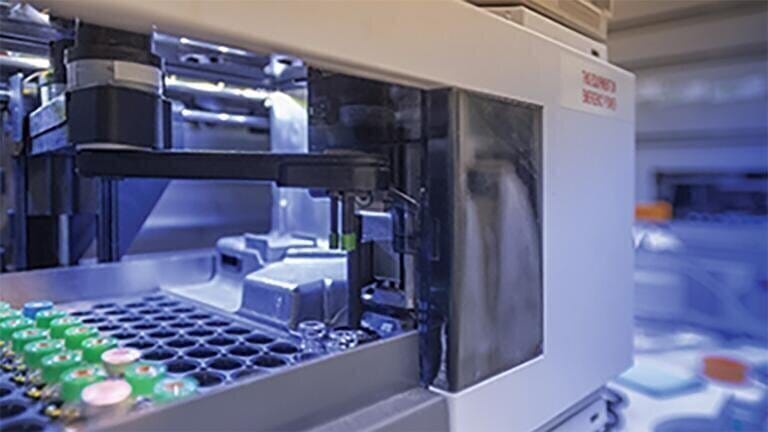
The demand for faster, more precise diagnoses in the life sciences sector is pushing analytical instrumentation to new heights. Manufacturers are increasingly relying on complex, harsh chemicals to enable these groundbreaking analyses. However, this progress presents a significant engineering challenge: the very chemicals that facilitate advanced research place immense stress on the internal components of the instruments themselves.
Of all these components, the humble elastomer seal—often an o-ring—plays one of the most critical roles. It acts as the primary barrier between sensitive internal mechanisms and the aggressive media being analysed. When exposed to harsh acids, solvents, and reactive gases under extreme pressure and temperature, an inadequate seal can degrade rapidly. This leads to leaks, sample contamination, and unintended downtime—scenarios that laboratories simply cannot afford.
Ensuring the reliability, lifespan, and accuracy of equipment like Chromatography Systems, DNA Synthesisers, and Mass Spectrometers starts with selecting the right material for the job.
There is no one-size-fits-all solution in analytical instrumentation. A seal that performs flawlessly in one context may fail in another. To maintain operational excellence and regulatory compliance, instrument makers must evaluate factors such as chemical compatibility, temperature range, and pressure requirements.
Greene Tweed experts recommend evaluating specific elastomeric groups to find the perfect match for your application's unique demands.
Ethylene Propylene Diene Monomer (EPDM) is a reliable choice for environments involving hot water, steam, and polar solvents like ethanol, methanol, and ammonia. It performs well at temperatures up to 149°C (300°F), making it suitable for less extreme, yet critical, applications.
When the application demands superior resistance to steam, FEPM elastomers such as Fluoraz® excel. These materials are engineered for harsh environments where fluids like hydrocarbons and oil are absent, offering a robust solution for specific high-temperature challenges.
Fluoroelastomers, including Fusion®, are renowned for their chemical resistance and high-temperature capabilities. They exhibit excellent compression set properties, making them ideal for instruments handling acids, solvents, and reagents where seal integrity must be maintained over long cycles.
For the most demanding environments, Perfluoroelastomers (FFKM) like Chemraz® offer the broadest chemical resistance available. They withstand organic and inorganic acids, bases, ketones, esters, and fuels. Furthermore, Chemraz® remains stable at temperatures above 177°C (350°F) and resists extreme steam (some chemraz compounds can remain stable at temperatures above 600F). Because it can be repeatedly sterilised using conventional methods without degrading, it is the premier choice for High-Performance Liquid Chromatography (HPLC), tissue processing, and blood analysers.
Selecting the incorrect seal material compromises more than just a single component; it jeopardises the integrity of the entire analytical instrument. In an industry where precision is paramount and failure is not an option, relying on general-purpose solutions is a risk large enterprises cannot take.
By leveraging deep industry knowledge and partnering with trusted experts, manufacturers can ensure their instruments outlast and outperform in even the harshest environments. Whether you are launching a new research project or upgrading existing equipment, choosing the right seal is the first step toward guaranteeing accurate results and seamless integration.


 Product directory













.jpg)