Bioanalytical
Published over 14 years ago. See the latest and most current information on Bioanalytical.
Pharma firm Immunomedics Inc. has reported that it has had some success with the initial clinical experience as with its latest targeted treatment of cancer, autoimmune and other serious diseases.
According to the company it has been looking into using a combination of different drugs and antibodies to help treat patients with relapsed aggressive non-Hodgkin lymphoma (NHL).
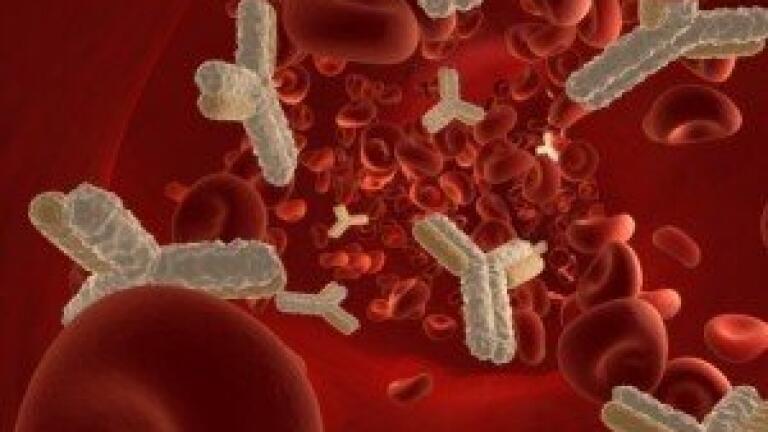
These include epratuzumab, the Company's humanized anti-CD22 antibody, radioisotope, yttrium-90 (90Y), and veltuzumab, the company's humanized anti-CD20 antibody.
As opposed to indolent NHL, aggressive NHLs have proven to be very resistant to currently approved antibody therapies unless they can be combined with a course of chemotherapy.
This imposes a problem, and a gap in treatment, especially when you consider that a significant percentage of patients who have relapsed or become refractory are ineligible for high-dose salvage therapy or stem cell transplant.
This can be due to a wide variety of issues including advanced age, chemo-resistant disease or concurrent co-morbid medical conditions.
In total, 13 patients who had failed one or more prior standard therapies to treat various types of aggressive NHL, took part in the phase I/II study.
They were given four weekly treatments of veltuzumab at 200 mg/m2, with indium-111-epratuzumab for imaging and pharmacokinetics on week 2 and 90Y-epratuzumab at planned dose levels on weeks three and four.
What researchers found was that half of the patients showed an overall objective response rate.
One diffuse large B-cell lymphoma (DLBCL) patient had a complete response which is on-going at nine months while three patients with transformed follicular NHL and one DLBCL patient were partial responders.
Three of these partial responders relapsed after periods of between three and six months with one on-going for a month.
When it came to mantle cell lymphoma, all three patients enjoyed stabilisation, while two patients relapsed after three to six months. One was on-going at 4 weeks.
Cynthia L. Sullivan, president and chief executive officer said, "We are pleased with this initial evidence of therapeutic activity in these difficult to treat patients.
"The trial is continuing to determine an acceptable 90Y dose for this population and define the safety and efficacy profile of this combination approach."
Posted by Ben Evans



 Product directory