Electrophoretic separations
Published over 15 years ago. See the latest and most current information on Electrophoretic separations.
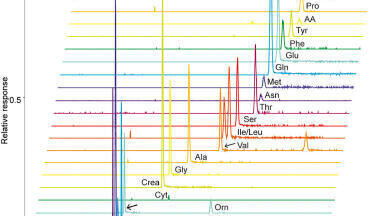
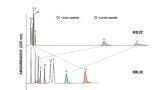
Metabolomics focuses on metabolite profile changes in diverse living systems caused by a perturbation. These metabolite signatures can be measured using numerous analytical instruments. Separation techniques used include gas chromatography, high-performance liquid chromatography, ultra-high-performance/pressure liquid chromatography (UPLC), capillary HPLC (cap-HPLC), capillary electrophoresis, and capillary electrochromatography, often linked to a mass spectrometer. These techniques are ideal for the identification and quantitation of small molecules, so naturally they are a big asset for metabolomics studies. The above mentioned techniques have been applied extensively in the field, with applications covering phytochemistry, toxicology and clinical research.
Metabolic fingerprinting is not a new concept and fingerprints were analysed in laboratories as soon as the capabilities of an instrument were evaluated. In October 2010 at the Desty Memorial Lecture, Milos Novotny(1)
commented on how urine fingerprints were collected between coworkers and analysed by GC-MS using what were in the early 70’s newly developed columns, with dietary experiments being performed on a regular basis The last two decades, thanks to data processing advancements, have seen increasing interest in the “omics” sciences, in particular genomics, proteomics, metabolomics and metabonomics.

 Product directory