HPLC, UHPLC
Published over 15 years ago. See the latest and most current information on HPLC, UHPLC.
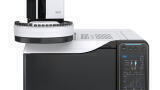
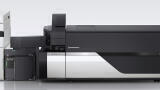
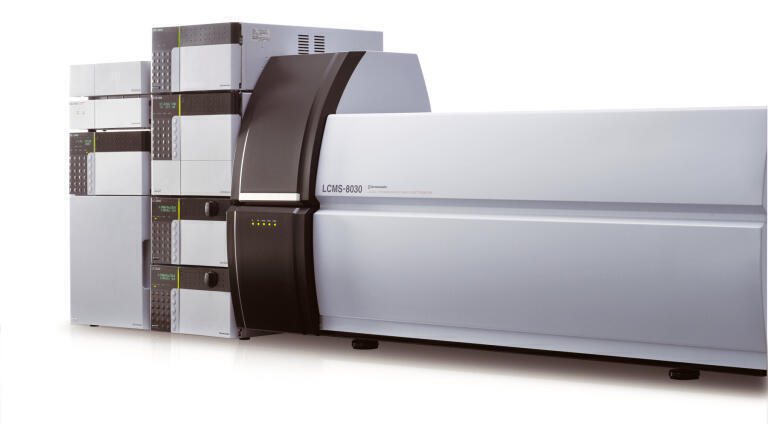
To increase lab efficiency, researchers are constantly challenged to detect more target analytes with greater sensitivity in hundreds of samples per day. To meet this challenge, Shimadzu (UK) has developed the LCMS-8030, which combines the power of triple quadrupole mass spectrometry with unmatched speed to provide the ideal complement to its UHPLC systems.
The LCMS-8030 features ultra-fast multiple reaction monitoring (MRM) transitions, enabling data acquisition with up to 500 different channels per second. The improvements to the electronics provide ultra-fast mass spectrum measurement speeds of 15,000 u/sec without sacrificing sensitivity or resolution, and ultra-fast polarity switching (15 msec) for the most information without signal deterioration.
Patented UFsweeper® technology accelerates ions out of the collision cell by forming a pseudo-potential surface. The result is high-efficiency collision-induced dissociation (CID) and ultra-fast ion transport, reducing the sensitivity losses and cross talk observed on other systems. In addition, higher radio frequency (RF) power capability minimises pauses between each transition.
When coupled with Shimadzu’s Nexera UHPLC, the LCMS-8030 can provide reliable and accurate detection of peaks only one-second wide, maximising UHPLC performance. With a polarity switching time of just 15 msec, ultra-fast triple quadrupole measurement time is now a reality.
The combination of the LCMS-8030 with Nexera also brings together the latest hardware on the same platform. The unified platform provides unmatched qualitative and quantitative analysis, increased productivity, and accelerated workflows for high-throughput analysis. Automated optimisation of analytical conditions for each quantitative target compound, which is the key to high-sensitivity analysis, allows unattended overnight operation. In addition, all software operations are handled seamlessly, reducing PC conflicts and the need for user intervention.




 Product directory