Identifying common proteins in malignant tumours could be a matter of undertaking
quantitative analysis using multiple variables, according to research published in BMC Bioinformatics.
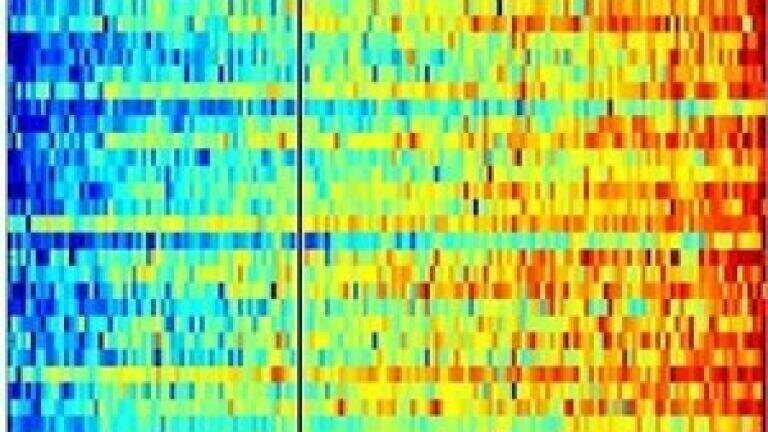
Scientists from Sweden's Karolinska Institute and AstraZeneca's research and development facility in Sodertalje carried out multivariate testing on proteomics data obtained from tumours in the human colon and prostate.
They used existing data from two-dimensional gel electrophoresis to undertake
quantitative analysis of proteins from different tumours in order to uncover any common patterns between them.
While previous research focusing on a single tumour type had not uncovered patterns in some proteins, the multivariate partial least squares approach adopted by the scientists was able to overcome this.
As a result, 14 proteins were identified for the two tumour types - colon and prostate - with matching patterns of differential expression in normal and malignant tissue.
BMC Bioinformatics carries peer-reviewed journal articles on novel statistical and computational approaches to analysing biological data.




 Product directory