Columns (LC)
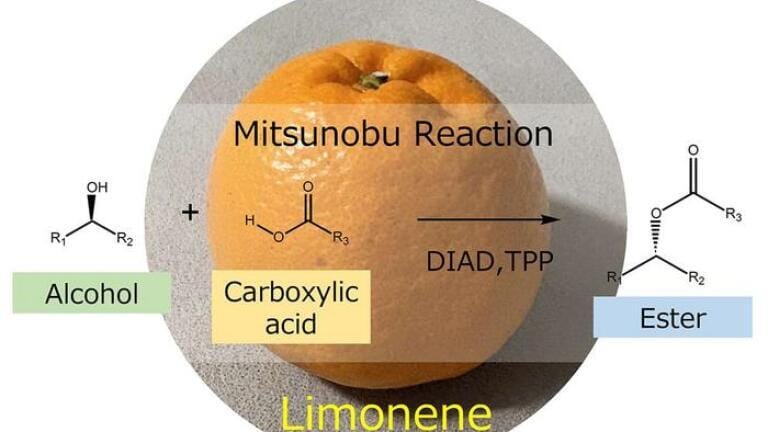
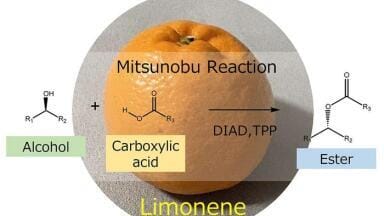
Researchers have reported that limonene, a citrus-derived solvent widely used in industrial applications, could simplify asymmetric synthesis through the Mitsunobu reaction by improve reaction efficiency and facilitate chromatographic purification of chiral ester products
The use of chromatography in asymmetric synthesis could benefit from a novel citrus-derived solvent system after researchers identified limonene as an effective medium for the Mitsunobu reaction, one of the most widely used methods to prepare chiral compounds for pharmaceutical and cosmetic applications.
Many biologically active molecules contain enantiomers, which are structural isomers that exist as non-superimposable mirror-image forms. These right- and left-handed molecular arrangements often exhibit markedly different biological properties, particularly in drug development where one enantiomer may provide therapeutic activity while the opposite form can prove less effective or potentially harmful. As a result, synthetic chemists have continued to seek methods that permit precise control over enantiomer formation during asymmetric synthesis.
The Mitsunobu reaction has remained an important synthetic route for this purpose because it enables stereochemical inversion during esterification and related transformations. Despite its widespread use, the reaction has long presented operational challenges, particularly during purification. Conventional Mitsunobu protocols often generate significant quantities of phosphorus-containing by-products that can prove difficult to remove, even with extensive chromatographic separation.
Researchers have now discovered that limonene, a naturally abundant terpene found in citrus fruit peels including oranges, can function as a reaction solvent that substantially simplifies both product isolation and purification. The study demonstrated that when limonene served as the solvent, only the desired ester product dissolved efficiently within the reaction medium. Insoluble by-products precipitated directly from solution, which enabled straightforward physical separation from the target compound.
The researchers reported that this behaviour also influenced the reaction equilibrium. Because the insoluble by-products precipitated during the reaction, the equilibrium shifted toward continued product formation until completion. The solvent therefore appeared to support both improved conversion efficiency and simplified downstream processing.
The findings could hold significance for chromatography workflows in synthetic chemistry laboratories. Purification frequently represents one of the most resource-intensive stages in asymmetric synthesis, particularly when conventional organic solvents produce complex mixtures that require repeated chromatographic separation. By reduce soluble contaminants within the crude reaction mixture, limonene-based systems could help chemists minimise purification burdens and solvent consumption.
Limonene has already seen widespread industrial use as a solvent in adhesives, detergents and cleaning agents because of its relatively low toxicity profile and renewable botanical origin. However, despite its established industrial role, researchers noted that its application as a reaction solvent in synthetic organic chemistry had not previously appeared in the literature.
The work therefore introduces a potentially valuable addition to sustainable synthetic chemistry strategies, particularly as laboratories and manufacturers seek alternatives to petrochemical-derived solvents. Citrus-processing waste streams provide substantial quantities of limonene, which may also support interest in renewable feedstocks and greener chemical manufacturing approaches.
Researchers suggested that the solvent’s unusual solubility characteristics could permit broader application across other synthetic transformations where by-product removal limits efficiency. Further investigation will likely determine whether limonene can support additional reaction classes or improve scalability for pharmaceutical and fine-chemical production.
For further reading please visit: 10.1007/s11696-026-04745-1

 Product directory

















.jpg)