Liquid chromatography
Accurate analysis of mRNA capping efficiency is essential for ensuring the quality, stability, and therapeutic performance of modern mRNA-based medicines. This Application Note presents an optimised analytical workflow using ion-pair reversed-phase liquid chromatography (IP-RP LC) in combination with the YMC Accura Triart Bio C18 column for the efficient analysis of capped and uncapped in vitro transcribed (IVT) mRNA.
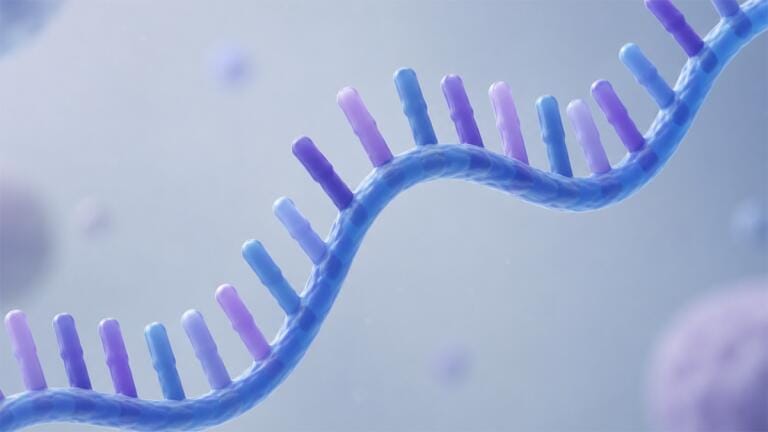
Messenger RNA therapeutics, including mRNA vaccines, require precise quality control because the 5’ cap structure plays a critical role in translation efficiency, transcript stability, and immune response modulation. While the Cap-0 structure consists of a 7-methylguanosine moiety, the Cap-1 structure contains an additional methyl group that reduces unwanted immune activation, making it the preferred structure for modern mRNA therapeutics. However, enzymatic capping processes can generate uncapped or partially capped impurities that may negatively affect product quality and efficacy.
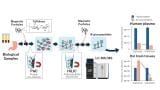
Direct chromatographic analysis of intact mRNA is difficult due to the large molecular size of the molecules. Therefore, capping efficiency is commonly assessed after RNase H-mediated fragmentation, which generates short 5’-terminal oligonucleotides suitable for chromatographic analysis. The separation of structurally similar capped and uncapped species, particularly those differing by only a single nucleotide, remains highly challenging and requires carefully optimised chromatographic conditions.
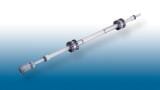
To address these challenges, YMC developed an optimised IP-RP LC method using the wide-pore YMC Accura Triart Bio C18 column with bioinert hardware. The bioinert-coated YMC Accura hardware minimises unwanted interactions between analytes and metal surfaces, thereby reducing adsorption effects and improving reproducibility. At the same time, the wide-pore YMC-Triart Bio C18 stationary phase enables efficient mass transfer for large biomolecules such as oligonucleotides, resulting in excellent peak shapes and high-resolution separations.
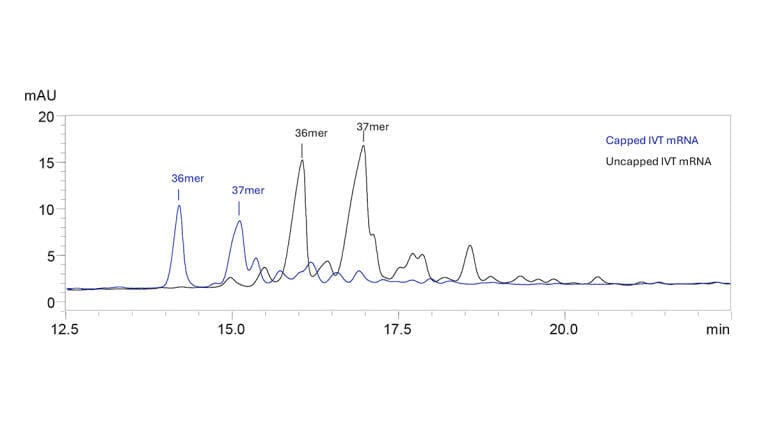
The chromatographic conditions were systematically optimised to improve the separation of structurally similar capped and uncapped IVT mRNA species. Key parameters including organic solvent composition, column temperature, gradient slope, and eluent composition were investigated to enhance selectivity and resolution. These optimised conditions enabled the clear separation of capped and uncapped IVT mRNA species differing by just one nucleotide.
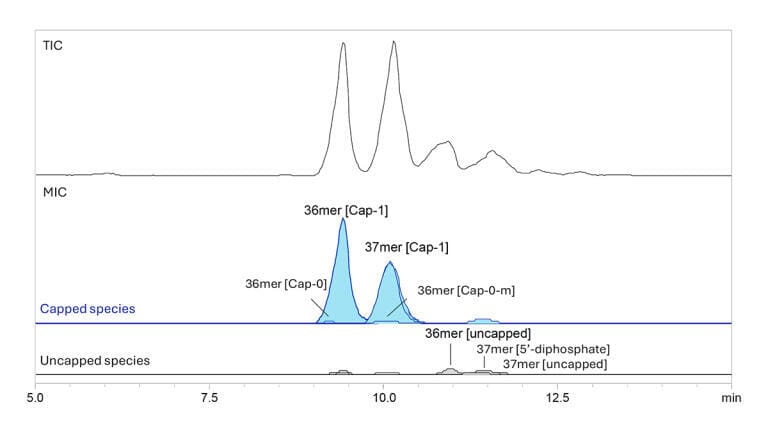
In addition to LC-UV analysis, the method was successfully applied to LC–MS analysis of Cap-1 modified mRNA species. Mass-extracted ion chromatograms enabled differentiation between Cap-1, Cap-0, partially methylated intermediates, 5’-diphosphate species, and uncapped impurities. Even minor impurity peaks could be reliably detected, highlighting the sensitivity and robustness of the analytical workflow.
Overall, this Application Note demonstrates a robust and reproducible workflow for assessing mRNA capping efficiency and impurity profiling. The combination of the optimised method and the YMC Accura Triart Bio C18 column with bioinert hardware provides excellent separation performance and reproducible analytical results, supporting confident quality control of mRNA therapeutics.

 Product directory