Liquid chromatography
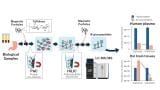
The rapid growth of mRNA-based therapeutics has created an increasing demand for reliable analytical methods to confirm mRNA sequences and ensure product quality. This novel two-dimensional liquid chromatography (2D-LC) approach offers a promising solution for generating detailed mRNA fingerprints. In this Technical Note, based on the publication by Carstensen et al.[1], ion-pair mediated anion-exchange chromatography (IPAX) in the first dimension is combined with ion-pair reversed-phase chromatography (IP-RP) in the second dimension, using a bioinert coated YMC Accura BioPro IEX QF column and UV detection. This workflow enables effective separation and analysis of RNA fragments produced by RNase digestion, allowing complex mRNA structures to be characterised through distinctive chromatographic fingerprint patterns.
The IPAX technique represents a hybrid separation mode that integrates features of both traditional ion-pair reversed-phase and anion-exchange chromatography. Weak ion-pairing cations interact with the negatively charged phosphate backbone of nucleic acids, partially neutralising their charge. This modification improves retention and enhances separation efficiency, enabling more effective differentiation of RNA fragments. Compared with conventional anion-exchange chromatography (AEX), which typically uses sodium chloride as an eluting salt, the IPAX approach utilises tetramethylammonium chloride (TMAC). This ion-pairing agent broadens the separation window and increases peak capacity by allowing fragments of different sizes to be resolved more effectively.
During method development, a systematic evaluation of temperature and flow rate was carried out to optimise the first-dimension separation. Temperatures of 20, 40 and 60 °C and flow rates of 0.05 and 0.10 mL/min were investigated. A temperature of 40 °C combined with a 0.10 mL/min flow rate was identified as the optimal balance between separation performance and analysis time. Under these conditions, the TMAC-based IPAX method demonstrated improved retention-time stability and higher fragment resolution compared with conventional AEX approaches.
To demonstrate the capability of the method, two digested mRNA samples were analysed: eGFP mRNA and raxtozinameran, the active ingredient in the Comirnaty® XBB.1.5 vaccine. In the second dimension, separation was performed using an optimised IP-RP method with tripropylammonium acetate as the ion-pairing agent. The resulting two-dimensional contour plots revealed clearly distinguishable fingerprint patterns for each mRNA.
For example, the eGFP mRNA exhibited a single long polyA tail of approximately 100–120 nucleotides, appearing as a distinctive feature in the chromatographic fingerprint. In contrast, raxtozinameran displayed a split polyA tail consisting of two fragments of around 30 and 70 nucleotides. Beyond these structural differences, both mRNA samples also showed unique distributions of smaller digest fragments across both chromatographic dimensions, reflecting the distinct sequences of each molecule.
Overall, the IPAX × IP-RP two-dimensional separation strategy represents a powerful tool for mRNA fingerprinting and quality control. By enabling clear differentiation of complex mRNA molecules following a single RNase digestion, the method offers an efficient and informative analytical approach that could be further enhanced when combined with mass spectrometry-based sequencing techniques.
[1] N. Carstensen, R. Karongo, A. Mengel, M. Lämmerhofer, Full comprehensive ion-pair-mediated anion exchange chromatography × ion-pair reversed-phase liquid chromatography fingerprinting of digested messenger ribonucleic acid drug substances, J. Chromatogr. Open, 2025, 8, 100271



 Product directory