Industrial news
Navigating the complexities of laboratories equipped with various instruments and diverse software packages is a common challenge in R&D organizations. Like many others, the team of process chemists in Pfizer’s Pharmaceutical Sciences Small Molecule (PSSM) team faced this challenge. They had a variety of instruments (some over 20 years old) and processed their LC/UV/MS data using multiple software packages. This resulted in:
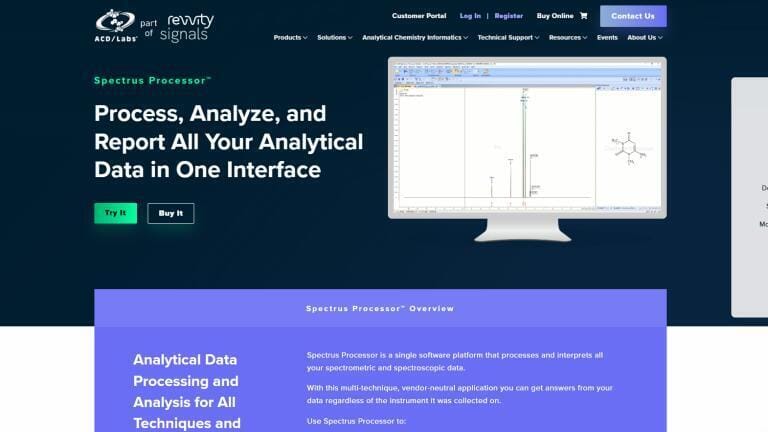
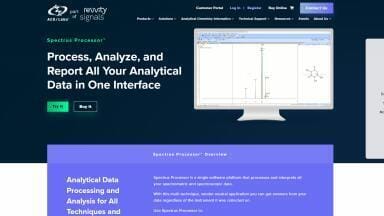
Due to the existing instruments’ age and the desire for consistency in data, the team transitioned to Agilent instruments. To prevent incurring additional capital expenses for new software and given the team’s satisfaction with the current software routinely used, efforts were made to ensure the compatibility of the new instrument with the existing Spectrus Processor software.
After the instrument change, additional criteria were set to enhance efficiency within their current workflow. To effectively meet these requirements, as well as the data management and workflow goals of the PSSM team, a different workflow using MS Workbook Suite was introduced. Built on the Spectrus platform, the additional tools in MS
Workbook Suite allowed for semi-automated processing, analysis, customized reporting of LC/UV/MS data, and databasing capabilities.
Process chemists on the team spent their time running low-value, time-consuming data processing and analysis steps. The semi-automated workflow freed up time for more valuable tasks, increasing the team’s efficiency.
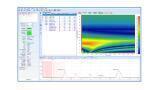
The scientists in the PSSM team are involved in reaction optimization and route scouting and can each run up to 30 reactions daily. Previously, they manually processed each sample which included extracting ion chromatograms, aligning channels, and componentizing the data—which would take an expert analyst about 5–10 minutes per sample. Using
the MS Workbook Suite workflow, this processing could be done in 1–2 minutes, saving scientists hours per week. MS Workbook Suite tools that contribute to this efficiency include:
NMR, LC/MS, and PXRD techniques are used by the PSSM team to optimize the various stages of synthesis and minimize impurities. Having one software to store and visualize all data simplifies the team’s workflows. MS Workbook Suite also allows the team to create customized reports and add data to their ELN—enabling the team to quickly share their data with the Analytical Research and Development (ARD) department, whom they work closely with.
Following the implementation of the MS Workbook Suite workflow, the PSSM team at Pfizer has reported:
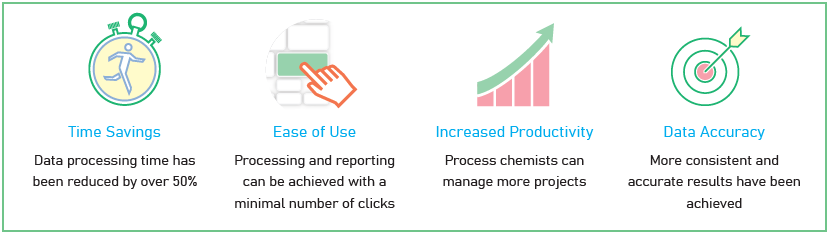
The MS Workbook Suite workflow has provided transformative results for the PSSM chemists’ data processing—boosting efficiency and accuracy. Automation of the workflow reduces repetitive work by pulling relevant files directly from the instrument and running pre-processing and processing steps—significantly reducing the scientist’s relative time burden, freeing up valuable chemist time, and increasing the team’s productivity.
Currently, there are 3 or 4 regular users, with plans to get their team of 20 trained to use it. Eventually, the team plans to incorporate the databasing capabilities of the software to store their data and results in a centralized database. Seeing the significant reduction in the time taken for data analysis using the semi-automated workflow, Pfizer is considering plans for full automation of the workflow, globally.


 Product directory













.jpg)