HPLC, UHPLC
Published over 3 years ago. See the latest and most current information on HPLC, UHPLC.
Oligonucleotides are important in genetic testing, research and forensics. For quite some time now, oligonucleotide-based approaches have been developed for different pharmaceutical applications. To monitor the temporal and dimensional spreading of oligonucleotides or proteins, they can be coupled to enhanced green fluorescent protein (EGFP).
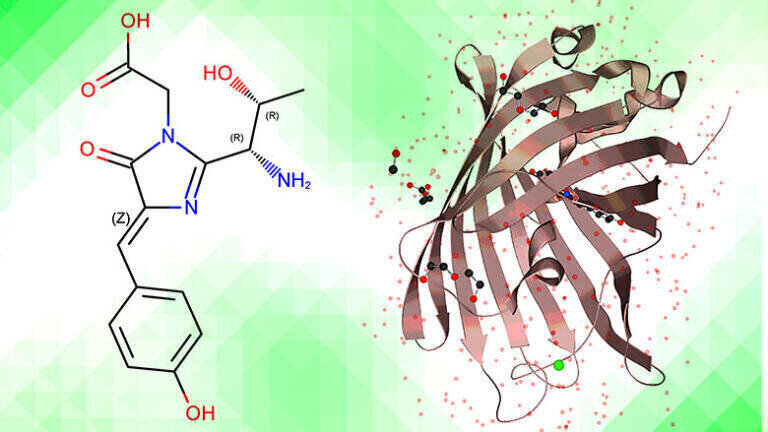
EGFP has a molecular weight of 26.9 kDa and is a single point mutation of the green fluorescent protein (GFP) which was first derived from jelly fish Aequorea Victoria. EGFP has improved spectral characteristics such as higher stability and a shift of the major extinction from 395 nm to 488 nm while the major emission is kept at 507 nm, which makes EGFP more suitable for existing spectral analyses.
Ion pair reversed phase liquid chromatography (IP-RP) continues to be the gold standard method for the characterisation of oligonucleotides. Certainly, the electron-rich backbone of oligonucleotides and the typical use of stainless-steel columns and tubing can cause an irreversible adsorption. This occurs due to ionic interactions with the positively charged metal oxide layer of the component’s surfaces.
This effect is even more critical when working at low to neutral pH as metals are more electropositive at these conditions. To overcome these challenges bioinert systems and columns such as the recently introduced YMC-Accura Triart columns can be used. YMC-Accura Triart columns have a bioinert coating on all surfaces, including the frits, to prevent any unwanted ionic interactions.
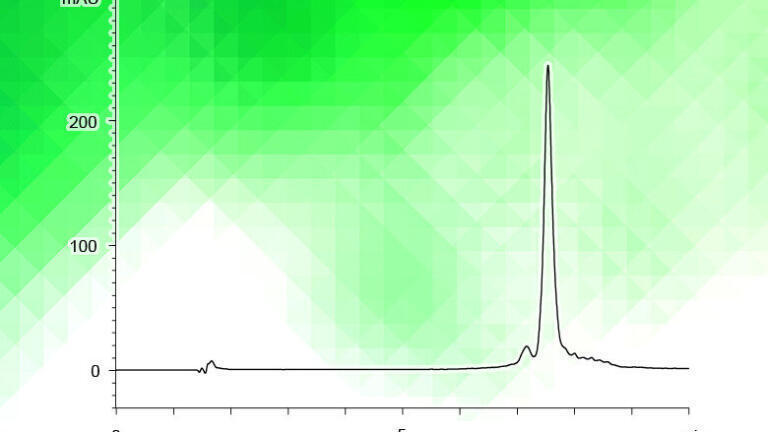
This application note shows the analysis of EGFP mRNA (996 nt). For the analysis of oligonucleotides columns with C18 modifications are commonly used. However, due to its high molecular weight and the accompanied high hydrophobicity a wide pore column with short chains such as C4 is more suitable for this kind of analysis. Excellent peak shapes and recoveries are achieved using a bioinert YMC-Accura Triart Bio C4 column with 300 Å at pH 7 and 80 °C.
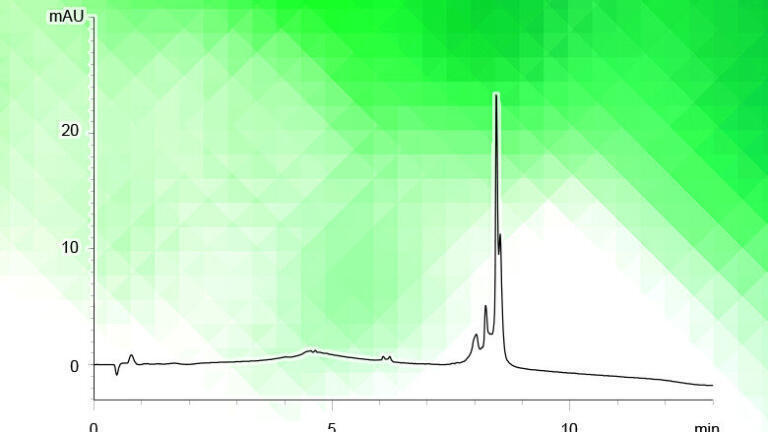
In addition to RP based methods, ion exchange (IEX) methods can provide an alternative approach. The strong anion exchanger BioPro IEX QF has a quaternary amine residue as the functional group. This non-porous column offers high efficiency, exceptionally high resolution at low operating pressures independent from the analytes’ molecular weight. The application note also shows the IEX separation of EGFP mRNA (996 nt) using a BioPro IEX QF column. Exceptionally sharp peaks are obtained in under 10 minutes applying a salt gradient using sodium chloride and relatively mild temperatures.


 Product directory