
HPLC, UHPLC
A trap-based microfluidic platform has enabled researchers in South Korea to extract and detect hazardous pollutants directly from solid-containing environmental samples, with no filtration or multistep pretreatment required
Environmental pollutant analysis has traditionally required complex sample pretreatment, including filtration, separation and preconcentration, before laboratories can attempt to quantify trace contaminants. When solid materials such as sand, soil or food residues are present in water samples, analytical accuracy often declines. Filtration may also remove trace-level target pollutants alongside suspended solids, which compromises sensitivity and reliability.
A joint research team led by Dr Ju Hyeon Kim at the Korea Research Institute of Chemical Technology (KRICT), in collaboration with Professor Jae Bem You’s group at Chungnam National University, has developed a microfluidic analytical device that has enabled direct extraction and analysis of pollutants from solid-containing samples without any pretreatment. The approach addresses a longstanding bottleneck in environmental chemistry and public health monitoring.
Water, food and environmental samples encountered in daily life may contain trace amounts of hazardous contaminants that are invisible to the naked eye. Accurate detection requires selective extraction and concentration of target analytes, which are the specific chemical substances under investigation. Laboratories have traditionally relied on liquid–liquid extraction, a method in which compounds partition between two immiscible liquid phases. While effective, this approach demands large solvent volumes, manual handling and substantial time. However, automation has remained difficult.
Liquid–liquid microextraction has emerged as a scaled-down alternative that uses smaller solvent volumes and offers greater efficiency. Yet even this technique has required filtration when samples contain solid particles. As a result, laboratories often follow a multistep workflow that includes solid removal, extraction and subsequent instrumental analysis. Each additional step increases cost and labour, extends turnaround time and introduces the risk of analyte loss or contamination. In fields that intersect directly with public health – including environmental surveillance, drinking water safety and pharmaceutical residue monitoring – such limitations carry significant implications.
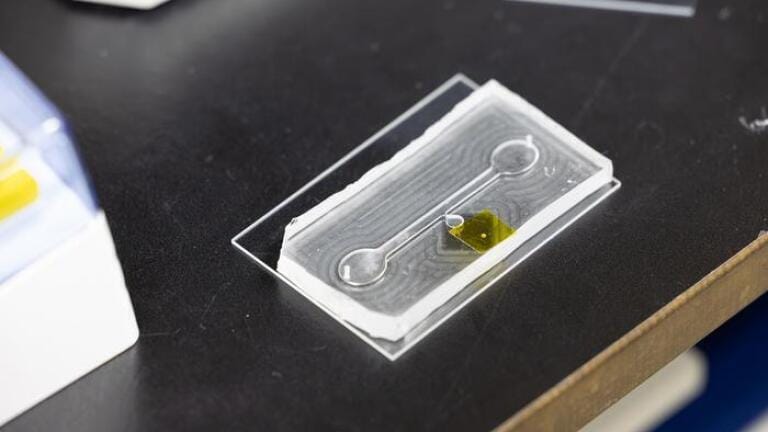
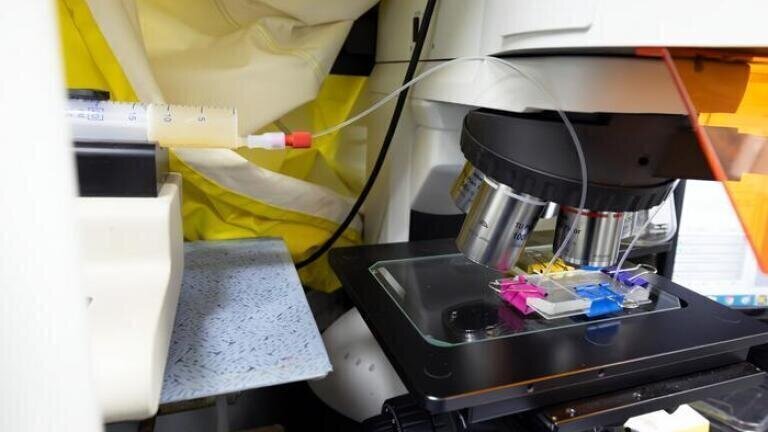
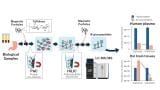
To overcome these challenges, the researchers designed a trap-based microfluidic device that confines a minute droplet of extractant within a microchamber while a sample solution flows continuously through an adjacent microchannel. Microfluidics refers to the manipulation of very small fluid volumes within channels that are typically no wider than a human hair. Within this configuration, target analytes transfer rapidly and selectively from the flowing sample into the stationary extractant droplet through diffusion and interfacial mass transfer. Crucially, suspended solid particles pass through the microchannel without disruption of the extraction process. After extraction, the droplet can be retrieved for downstream instrumental analysis.
The team evaluated the platform using perfluorooctanoic acid, a member of the per- and polyfluoroalkyl substances (PFAS) group that has attracted regulatory scrutiny because of environmental persistence and potential health risks. They also tested carbamazepine, an anticonvulsant pharmaceutical frequently detected in wastewater and surface water as a result of incomplete removal during treatment.
Carbamazepine was extracted directly from sand-containing slurry samples without filtration. Signals for perfluorooctanoic acid appeared within five minutes, and carbamazepine extracted from slurry samples was clearly identified through high-performance liquid chromatography.
These results indicate that the microfluidic platform can reduce analytical steps while maintaining high reliability and sensitivity. By eliminating the need for filtration and separate extraction stages, the device offers a more streamlined and potentially route to for automation and detect trace pollutants in complex matrices. The compact design may support integration into portable systems for field deployment, which could prove valuable for rapid environmental assessment and food safety inspection.
“Integrating multiple pretreatment steps into a single process offers substantial advantages for on-site analysis and automated systems,” said Dr Kim, who led the study. His comments underscored the practical benefits of consolidation within analytical workflows.
“This technology can enhance the reliability of environmental and food safety analyses that directly impact public health,” said Dr. Young-Kuk Lee, president of the KRICT, saying how the development sits within a broader institutional mission to strengthen analytical infrastructure and regulatory science.
The device exemplifies a broader shift within analytical chemistry towards miniaturisation, solvent reduction and system integration. Microfluidic platforms can deliver precise control of fluid interfaces and mass transfer, which are critical determinants of extraction efficiency. As regulatory authorities impose tighter limits on contaminants such PFAS and pharmaceutical residues, laboratories face pressure to detect ever lower concentrations from within increasingly complex samples.
For further reading please visit: 10.1021/acssensors.5c01878

 Product directory









.jpg)
.jpg)