HPLC, UHPLC
Researchers have reported the development of a reversed-phase isocratic high-performance liquid chromatographic method to achieve optimal baseline resolution of the anticancer agents doxorubicin and 4′-epidoxorubicin (epirubicin), their principal metabolites, and daunorubicin, which was used as an internal standard.
The work applied formal statistical procedures to predict the most effective mobile phase composition. Range-finding studies used solvent selectivity triangle and factorial design techniques, followed by the modified simplex sequential procedure. These methods identified the required parameters for organic modifier, buffer strength and pH to employ with a Spherisorb ODS 1 column, ensuring the separation of eight anthracycline solutes. Ultraviolet and fluorescence detection were applied (λex = 254 nm, λem = 560 nm), with fluorescence enabling a low detection limit of 1 ng ml−1 for doxorubicin in serum. The optimal mobile phase was acetonitrile–0.06 M sodium hydrogen phosphate containing 0.05% (v/v) triethylamine, adjusted to pH 4.6 with 0.03 M citric acid (35:65, v/v).
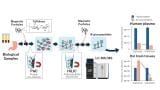
The researchers have also developed a solid-phase extraction method to isolate anthracyclines by adsorption onto C8 Bond-Elut cartridges. The process was based on extraction of serum spiked with a mixture of anthracycline solutes, followed by elution with acetonitrile–0.2 M sodium hydrogen phosphate containing 0.05% (v/v) triethylamine, adjusted to pH 3.6 with 0.1 M citric acid (67.5:32.5, v/v). Reproducible recoveries were obtained for doxorubicin (94 ± 8%) and epirubicin (96 ± 8%) with n = 5, while the 7-deoxyaglycone metabolite showed a recovery of 99%, higher than other extraction methods reported.
The solid-phase extraction procedure has enabled rapid and reproducible determination of anthracyclines and their metabolites in biological matrices despite their differing physicochemical properties.
For further reading please visit: 10.1016/0731-7085(91)80104-H

 Product directory