HPLC, UHPLC
Published over 12 years ago. See the latest and most current information on HPLC, UHPLC.
Chromatography is the science of separating mixtures. In order to do this, substances are passes through 2 different phases – these are phases are known as stationary and mobile. As is indicated by the terms used, the mobile phase flows through the system, while the stationary phase remains static. Initially, a mixture is dissolved in a liquid (or changed into a gas) which transports it through a structure holding the stationary phase – usually another material, such as paper or beads.
In a mixture containing several different proteins, for example, the target molecule will react with the stationary phase, whilst the remaining proteins will flow through the system (mobile phase). Once the target protein has been separated in this way, it needs to be moved from the stationary phase into the mobile phase. Eluting the target molecule will bring about this change.
The mobile phase can involve gas or liquid. (Gas chromatography is more commonly used in analytical chemistry.) The mobile phase propels a substance through a structure, which holds the stationary phase, enabling chromatographic separation to occur. Gas chromatography requires very high temperatures to work, and is generally performed in a tube. In the context of gas chromatography, the stationary phase often consists of an area densely packed with beads. Liquid chromatography differs from gas chromatography in that it is traditionally carried out in a plane or a column. The static phase may be paper, beads or some other material.
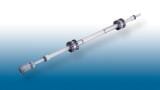
Among the most commonly practiced forms of chromatography is column chromatography. In this instance, the stationary phase is represented by a column. Often, the column is formed from a matrix of tightly packed beads. After the mobile phase has entered the column, it flows out. Since the column is twinned with a detection device, absorption rates can be measured and recorded, and any protein which has been eluted can be detected.
An important facet of separation science, chemical chromatography can be both preparative and analytical. Preparative chromatography seeks to isolate usable substances, while analytical chromatography strives to measure the quantities of analytes present in any given substance. Chromatographic findings inform many other scientific disciplines, manufacture and engineering.
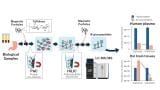
This article, Getting the best of both worlds: Ensuring the perfect partnership of chromatographic separation an MS detection for protein quantification, describes the chromatographic quantification of proteins in more detail.



 Product directory